


1. Consider the following statements regarding Public Service Commissions in India:
1. The first Public Service Commission in India was established under the Government of India Act, 1935
2. The Montagu–Chelmsford Report recommended the creation of an independent Public Service Commission.
3. The Constitution specifies minimum age and qualifications for appointment as PSC members.
Which of the above statements is/are correct?
(a) 2 only
(b) 1 and 2 only
(c) 2 and 3 only
(d) 1, 2 and 3
Answer: (a) 2 only
Explanation:
In NEWS: How can State PSCs be reformed?
Public Service Commissions (PSCs) in India:
- The first Public Service Commission in India was established in 1926 under the provisions of the Government of India Act, 1919, following the Montagu–Chelmsford Reforms. Hence statement 1 is incorrect.
- The Montagu–Chelmsford Report (1918) recommended the creation of a permanent, independent Public Service Commission to ensure merit-based recruitment free from political influence. Hence statement 2 is correct.
- The Government of India Act, 1935 provided for the establishment of Provincial (State) Public Service Commissions.
- Articles 315 to 323 of the Constitution provide for the establishment, composition, tenure, removal, and powers of the UPSC and State PSCs.
- The Constitution does not prescribe minimum age, qualifications, or prior experience for appointment as members of the UPSC or State PSCs. Hence statement 3 is incorrect.
- The 41st Constitutional Amendment Act, 1976 increased the upper age limit of State PSC members from 60 to 62 years.
- The UPSC functions in a comparatively politically sterile environment, while State PSCs operate in a politically osmotic environment with visible influence on appointments.
- The Ministry of Personnel, Public Grievances and Pensions, created in 1985, ensures systematic manpower planning and timely vacancy notifications for UPSC examinations.
- Most States lack a dedicated personnel ministry, leading to irregular vacancy notifications and delayed recruitment cycles.
- UPSC periodically revises its syllabus through expert committees, whereas most State PSCs rarely update their syllabi.
- UPSC uses inter-se moderation to reduce subjectivity in evaluation; State PSCs often struggle with this process.
- State PSCs face increased litigation due to issues in vertical, horizontal, and zonal reservation calculations and translation errors between English and regional languages.
- Reforms suggested include setting a minimum age of 55 and maximum age of 65 for PSC members along with clearly defined qualifications.
- It is recommended that syllabus revision proposals be placed in the public domain and finalised after public consultation.
- A senior officer with experience in school or intermediate education administration should serve as the Secretary of State PSCs to improve exam management.
| PYQ REFERENCE: (2012) Q. The distribution of powers between the Centre and the States in the Indian Constitution is based on the scheme provided in the (a) Morley-Minto Reforms, 1909 (b) Montagu-Chelmsford Act, 1919 (c) Government of India Act, 1935 (d) Indian Independence Act, 1947 |
Source:https://www.thehindu.com/news/national/how-can-state-pscs-be-reformed-explained/article70314087.ece
2. Consider the following statements regarding the Open Planetary Intelligence Network (OPIN):
1. It is a global, open-access platform aimed at sharing data and knowledge on planetary health and climate resilience.
2. OPIN seeks to integrate AI-driven insights with human decision-making to support environmental governance.
3. Membership in OPIN is restricted to UN member states only.
Which of the statements given above is/are correct?
(a) 1 only
(b) 1 and 2 only
(c) 2 and 3 only
(d) 1, 2 and 3
Answer: (b) 1 and 2 only
Explanation:
In NEWS: COP30: differences persist over fossil fuel phase-out roadmap
Open Planetary Intelligence Network (OPIN)
- OPIN is an international initiative aimed at sharing knowledge, data, and best practices on planetary health, climate resilience, and environmental governance.
- OPIN functions as a global, open-access platform enabling collaboration among governments, scientists, civil society, and AI systems for tackling planetary challenges. Hence statement 1 is correct.
- The network promotes evidence-based policy-making on issues such as biodiversity loss, climate change, sustainable development, and disaster management.
- OPIN seeks to integrate AI-driven insights with human governance to support better environmental planning and crisis response. Hence statement 2 is correct.
- OPIN is open and collaborative, not limited only to UN member states; it encourages participation from research institutions, NGOs, and other stakeholders. Hence statement 3 is incorrect
- The platform supports real-time data exchange, including information on weather events, planetary boundaries, pollution, and ecosystem health.
- OPIN emphasizes transparency, open science, and global cooperation, aligning with UN principles on sustainable development and planetary stewardship.
- One of the core goals is to build a shared planetary dashboard tracking global environmental indicators.
- OPIN aims to increase the capacity of developing nations by providing open tools and data for climate adaptation and mitigation.
- The initiative also focuses on community participation, ensuring indigenous and local knowledge is integrated into global environmental decision-making.
- OPIN is part of a global movement toward “planetary intelligence”, which combines AI, scientific data, and decentralized governance to manage planetary-scale risks.
| PYQ REFERENCE: (2022) Q. Consider the following: 1. Aarogya Setu 2. CoWIN 3. DigiLocker 4. DIKSHA Which of the above are built on top of open-source digital platforms? (a) 1 and 2 only (b) 2, 3 and 4 only (c) 1, 3 and 4 only (d) 1, 2, 3 and 4 |
3. With reference to the African Grey Parrot, consider the following statements:
1. It is native to the tropical forests of West and Central Africa.
2. It is listed as Critically Endangered on the IUCN Red List.
3. Habitat loss is the only major threat to its survival in the wild.
How many of the above statements are correct?
(a) Only one
(b) Only two
(c) All three
(d) None
Answer: (a) Only one
Explanation:
In NEWS: State Forest Departments across India have no record of African grey parrot trade, reveal RTI responses
African Grey Parrot
- The African Grey Parrot (Psittacus erithacus) is native to the tropical rainforests of West and Central Africa. Hence statement 1 is correct.
- It is globally known for its high cognitive ability and advanced mimicry skills.
- The species is listed as Endangered on the IUCN Red List due to habitat loss and extensive trapping for the pet trade. Hence statement 2 is incorrect.
- It is included under CITES Appendix I, which prohibits international commercial trade of wild-caught specimens.
- The major threats to the species are illegal wildlife trade, habitat destruction, and deforestation in Central African countries. Hence statement 3 is incorrect.
- Key range countries include the Democratic Republic of Congo, Cameroon, Ghana, and Côte d’Ivoire.
- The African grey parrot plays an important ecological role as a seed disperser in tropical forests.
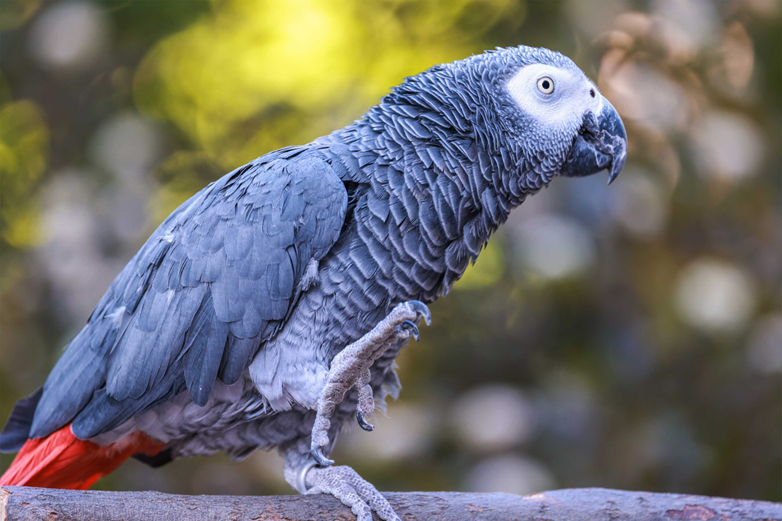
- Two main subspecies are recognized:
- Congo African Grey (Psittacus erithacus erithacus)
- Timneh African Grey (Psittacus timneh)
- Timneh Grey Parrot is smaller and darker, and is found primarily in West Africa (e.g., Sierra Leone, Liberia).
- Population decline has been particularly severe in Ghana, where numbers have reduced by over 90% in some areas.
- Many African countries have imposed export bans, but illegal trade routes still operate through Central and West Africa.
- Conservation efforts include community-based forest protection, captive-breeding regulation, and strengthening CITES enforcement.
| PYQ REFERENCE: (2025) Q. Regarding Peacock tarantula (Gooty tarantula), consider the following statements: I. It is an omnivorous crustacean. II. Its natural habitat in India is only limited to some forest areas. III. In its natural habitat, it is an arboreal species. Which of the statements given above is/are correct? (a) I only (b) I and III (c) II only (d) II and III |
4. With reference to AUSINDEX, consider the following statements:
1. AUSINDEX is the only bilateral naval exercise between India and Australia that includes dedicated anti-submarine warfare (ASW) drills.
2. AUSINDEX is mandated under the India–Australia Mutual Logistics Support Agreement (MLSA).
Which of the statements given above is/are correct?
(a) 1 only
(b) 2 only
(c) Both 1 and 2
(d) Neither 1 nor 2
Answer: (a) 1 only
Explanation:
In NEWS: INS Sahyadri and HMAS Ballarat take part in AUSINDEX 2025 exercise in Northern Pacific
AUSINDEX:
- AUSINDEX is a bilateral maritime exercise between the Indian Navy and the Royal Australian Navy.
- It is the only bilateral naval exercise between India and Australia that includes dedicated anti-submarine warfare (ASW) drills. Hence statement 1 is correct.
- The exercise was first conducted in 2015.
- The objective is to enhance maritime cooperation, interoperability, and security in the Indo-Pacific region.
- It focuses primarily on anti-submarine warfare (ASW), maritime surveillance, and complex naval manoeuvres.
- AUSINDEX forms part of the broader India–Australia defence cooperation framework. Hence statement 2 is incorrect.
- The exercise complements multilateral naval engagements like MALABAR and RIMPAC, where both countries often participate.
- Activities include naval drills, surface and air operations, helicopter operations, and coordinated patrols.
- It supports the shared vision of a free, open, and rules-based Indo-Pacific.
- AUSINDEX is usually held every two years, though schedules may vary.
- Modern platforms such as P-8I (India) and P-8A (Australia) maritime patrol aircraft often participate.
5. Consider the following statements regarding mosses (Bryophytes):
1. Some mosses can survive complete desiccation and revive upon rehydration.
2. Some mosses can tolerate high levels of radiation, including those found in outer space.
3. Some mosses can act as bioindicators of air pollution.
4. Some mosses can perform nitrogen fixation.
How many of the above statements are correct?
(a) Only one
(b) Only two
(c) Only three
(d) All four
Answer: (c) Only three
Explanation:
In NEWS: Moss spores survive months in space: Why is this significant?
Characteristics of Moss Spores:
Desiccation Tolerance:
- Certain mosses such as Tortula ruralis and Syntrichia caninervis can survive up to 95% water loss.
- These mosses revive completely when water becomes available again.
- Desiccation tolerance in mosses is enabled by protective proteins, sugar molecules like trehalose, and flexible cell walls.
- This trait evolved because mosses are among the earliest land plants, exposed to harsh terrestrial conditions.
Radiation and Space Survival
- Moss spores of Physcomitrium patens survived 283 days outside the International Space Station (ISS).
- Over 80% of the exposed moss spores remained viable and successfully germinated after returning to Earth.
- Moss spores tolerate cosmic radiation, UV exposure, extreme temperatures, and vacuum.
- Multi-layered spore walls act as natural “passive shields’’ against radiation damage.
- Space-modelling studies estimate that moss spores could survive in outer space for up to 15 years.
Bioindicator Role
- Mosses absorb nutrients and contaminants directly from the atmosphere, not through roots.
- This enables them to accumulate heavy metals, SO₂, NOx, and organic pollutants from the air.
- Mosses are widely used in moss monitoring programs for air-quality assessment in Europe and Asia.
- Species such as Hypnum cupressiforme and Pleurozium schreberi are standard bioindicator mosses.
Nitrogen Fixation Myth
- Mosses do not perform nitrogen fixation themselves. Hence 4 is incorrect.
- Nitrogen fixation occurs via cyanobacteria living on the surface of mosses, especially on Sphagnum moss.
- Ecosystems benefit from nitrogen fixed by cyanobacteria, but the moss is not the nitrogen-fixing organism.
Significance of Moss
- Mosses demonstrate ancient plant survival strategies, helping scientists understand early plant evolution on land.
- Their desiccation tolerance serves as a model for improving drought resistance in modern crops.
- Their ability to survive cosmic radiation and vacuum provides insights into the possibility of life enduring harsh extraterrestrial environments.
- Moss spores surviving on the ISS show potential for bio-regenerative life-support systems in future lunar and Martian habitats.
- Mosses contribute to carbon sequestration, especially in peatlands dominated by Sphagnum species.
- Moss-dominated peatlands store nearly 30% of global soil carbon, making them crucial in climate regulation.
- Mosses act as low-cost bioindicators for monitoring air quality and heavy-metal pollution.
- Their sensitivity to atmospheric contaminants helps governments design pollution-control policies.
- In ecosystems, mosses help in soil formation, moisture retention, and preventing erosion.
- Moss–cyanobacteria associations enhance nitrogen input into nutrient-poor ecosystems, supporting biodiversity.
- Understanding moss stress tolerance aids biotechnology research in stress-resistant biomaterials.
- Their space survival provides evidence relevant to astrobiology, particularly studies on panspermia (life dispersal).
| PYQ REFERENCE: (2023) Q. Consider the following statements: 1. Some mushrooms have medicinal properties. 2. Some mushrooms have psycho-active properties. 3. Some mushrooms have insecticidal properties. 4. Some mushrooms have bioluminescent properties. How many of the above statements are correct? (a) Only one (b) Only two (c) Only three (d) All four |
Source: https://indianexpress.com/article/explained/explained-sci-tech/moss-spores-space-10381796/
6. Which one of the following is the best description of ‘INS Mahe’, that was in the news recently?
(a) Amphibious warfare ship
(b) Anti-Submarine shallow water warfare vessel
(c) Torpedo launch and recovery vessel
(d) Nuclear-powered aircraft carrier
Answer: (b) Anti-Submarine shallow water warfare vessel
Explanation:
In NEWS: The Indian Navy commissioned INS Mahe
INS Mahe:
- First indigenously designed and built Mahe-class Anti-Submarine Warfare Shallow Water Craft (ASW-SWC). Hence option (b) is correct.
- Lead ship of eight vessels in her class.
- Over 80% indigenous content, reinforcing Atma Nirbhar Bharat and India’s naval self-reliance.
Design & Features:
- Named after the historic coastal town of Mahe.
- Crest: Urumi (flexible sword) rising from stylised waves – symbolizing agility, precision, and lethal grace.
- Mascot: Cheetah, representing speed and focus.
- Motto: “Silent Hunters” – reflecting stealth, vigilance, and readiness.
Combat Capability:
- Advanced weapons, sensors, and communication systems for anti-submarine operations in coastal and shallow waters.
- Can detect, track, and neutralise sub-surface threats.
- Designed for prolonged shallow water operations.
- Integration of systems from BEL, L&T Defence, Mahindra Defence, NPOL, and 20+ MSMEs.
Strategic Importance:
- Strengthens coastal defence and the Indian Navy’s ASW capabilities.
- Integrates with larger surface combatants, submarines, and aviation assets.
- Enhances near-sea dominance, maritime security, and multi-domain operational synergy with Army and Air Force.
- Supports joint operations, HADR, and amphibious missions.
| PYQ REFERENCE: (2016) Q. Which one of the following is the best description of ‘INS Astradharini’, that was in the news recently? (a) Amphibious warfare ship (b) Nuclear-powered submarine (c) Torpedo launch and recovery vessel (d) Nuclear-powered aircraft carrier |
Source: https://www.pib.gov.in/PressReleasePage.aspx?PRID=2193558
7. Which one of the following statements best describes ‘Fujiwhara interaction’, recently seen in the news?
(a) The interaction between warm and cold ocean currents leading to rapid cyclogenesis.
(b) The phenomenon in which two nearby cyclonic systems rotate around a common centre and influence each other’s movement.
(c) The sudden intensification of a tropical cyclone due to a burst of deep convection near the eyewall.
(d) The reversal of wind patterns in the equatorial Pacific associated with El Niño events.
Answer: (b) The phenomenon in which two nearby cyclonic systems rotate around a common centre and influence each other’s movement.
Explanation:
In NEWS: Multiple cyclonic storms with rare Fujiwhara interaction likely in Bay of Bengal
- Two cyclonic systems are forecast to form in the Bay of Bengal within a short time of each other, raising the possibility of a Fujiwhara-type interaction.
- This interaction could increase uncertainty around their future track and intensity, making forecasting more difficult.
- The India Meteorological Department (IMD) is closely monitoring both systems:
- One system is expected to develop from a low-pressure area over the Straits of Malacca and intensify into a cyclone in the south Bay of Bengal by around November 27.
- It is linked to an upper-air cyclonic circulation over the Comorin area, which may lead to another depression forming over the southwest Bay of Bengal or near Sri Lanka.
Fujiwhara Interaction:
- The Fujiwhara interaction is a phenomenon in which two nearby cyclonic systems come close enough that their circulations begin to influence each other. When this happens, the storms may:
- Rotate around a common centre,
- Alter each other’s tracks,
- Move closer and merge, or
- Weaken or intensify depending on their relative strengths.
- This interaction usually occurs when two cyclones are within about 1,000 km of each other. It makes forecasting more difficult because the storms’ movements become more unpredictable.
Hence option (b) is correct.
| PYQ REFERENCE: (2017) Q. With reference to ‘Indian Ocean Dipole (IOD)’ sometimes mentioned in the news while forecasting Indian monsoon, which of the following statements is/are correct? 1. IOD phenomenon is characterised by a difference in sea surface temperature between tropical Western Indian Ocean and tropical Eastern Pacific Ocean. 2. An IOD phenomenon can influence an EI Nino’s impact on the monsoon. Select the correct answer using the code given below: (a) 1 only (b) 2 only (c) Both 1 and 2 (d) Neither 1 nor 2 |
8. The ‘Hayli Gubbi’ volcano, recently seen in the news is a
(a) Shield volcano
(b) Composite volcano
(c) Caldera
(d) Cinder cone volcano
Answer: (a) Shield volcano
Explanation:
In NEWS: India braces for disruption of air travel after Ethiopia’s Hayli Gubbi volcano erupts
Hayli Gubbi Volcano:
- It is located in the Afar Region of northeastern Ethiopia, part of the tectonically active Erta Ale Range.
- It is a shield volcano, characterized by gentle slopes formed by low-viscosity lava flows. Hence option (a) is correct.
- The summit of the volcano is approximately 493 meters above sea level.
- Before 2025, the volcano had been dormant for roughly 10,000–12,000 years, with no recorded eruptions in the Holocene.
- The volcano erupted on 23 November 2025, marking its first activity in millennia.
- The eruption was explosive, producing an ash plume that reached 10–15 km into the atmosphere.
- A significant sulfur-dioxide (SO₂) plume was also emitted during the eruption.
- High-altitude winds carried the volcanic ash across the Red Sea toward Yemen, Oman, and as far as India.
- The eruption is considered rare and significant because of the long dormancy and potential hazards for aviation and the environment.
Causes of Volcanic Eruptions
- Tectonic Plate Movements
- Divergent boundaries: Plates move apart → magma rises (e.g., Mid-Atlantic Ridge).
- Convergent boundaries: Subduction zones cause melting → volcanic activity (e.g., Pacific Ring of Fire).
- Hotspots / Mantle Plumes
- Magma rises through the crust away from plate boundaries (e.g., Hawaii, Iceland).
- Pressure in Magma Chambers
- Accumulation of magma and gas increases pressure → eruption occurs.
- Weak Zones in the Crust
- Fissures or fractures allow magma to escape.
Consequences / Impacts of Volcanic Eruptions
A. Environmental Impacts
- Destruction of forests, farmland, and natural habitats
- Air pollution due to ash and gases (SO₂, CO₂)
- Climate effects: short-term cooling from ash and SO₂
B. Human / Social Impacts
- Loss of life and injuries from lava flows, pyroclastic flows, and ashfall
- Displacement of populations and destruction of homes
C. Economic Impacts
- Damage to infrastructure (roads, bridges, airports)
- Disruption of trade, tourism, and agriculture
D. Health Impacts
- Respiratory problems and diseases from inhaling ash and toxic gases
E. Positive / Beneficial Impacts
- Formation of fertile soils for agriculture
- Creation of new land and volcanic islands
- Potential for geothermal energy
| PYQ REFERENCE: (2024) Q. Consider the following : 1. Pyroclastic debris 2. Ash and dust 3. Nitrogen compounds 4. Sulphur compounds How many of the above are products of volcanic eruptions? (a) Only one (b) Only two (c) Only three (d) All four |
9. Consider the following statements:
Statement-I: Nearly 70% of corals faced destruction at the UNESCO-listed Ningaloo Reef.
Statement-II: Recently, an unprecedented marine heat wave occurred in Western Australia.
Which one of the following is correct in respect of the above statements?
(a) Both Statement-I and Statement-II are correct and Statement-II explains Statement-I
(b) Both Statement-I and Statement-II are correct, but Statement-II does not explain Statement-I
(c) Statement-I is correct, but Statement-II is incorrect
(d) Statement-I is incorrect, but Statement-II is correct
Answer: (a) Both Statement-I and Statement-II are correct and Statement-II explains Statement-I
Explanation:
In NEWS: ‘Unprecedented’ heatwave kills nearly two-thirds of corals at UNESCO-listed Ningaloo Reef
Ningaloo Reef:
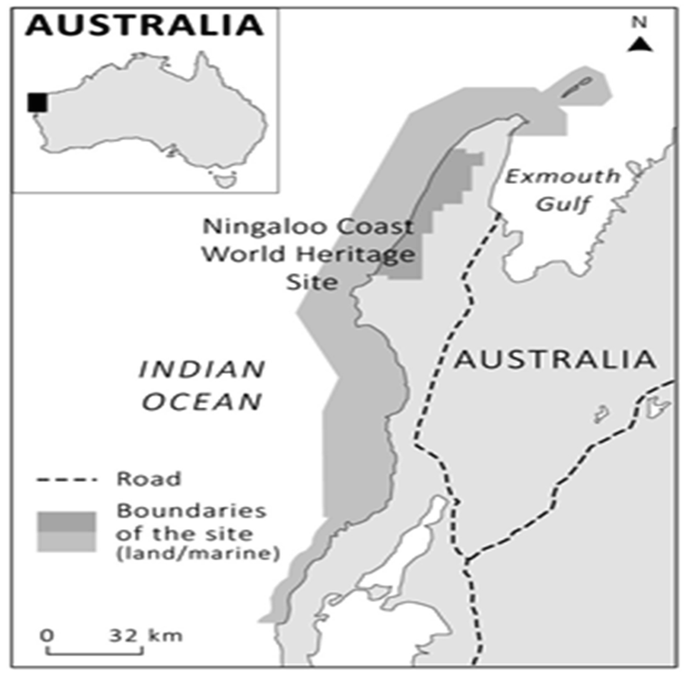
- An unprecedented marine heatwave has killed nearly 70% of corals at the UNESCO-listed Ningaloo Reef in Western Australia. Hence both Statement-I and Statement-II are correct and Statement-II explains Statement-I
- The reef’s northern lagoon, covering eight survey sites, now shows more than 60% coral mortality.
- In March, researchers counted over 1,600 individual corals; by October, only about 600 remained alive.
- The heatwave was described as the longest, largest, and most intense “underwater” heatwave ever recorded in Australia.
- The reef was already under stress before this event: in 2022, low oxygen levels caused a sharp drop in live coral cover in some areas.
- On a global scale, bleaching-level heat stress has affected a very large portion of reefs: according to NOAA data cited, about 84.4% of the world’s coral reef area has been exposed to such stress.
Threats to corals:
- Rising sea temperatures cause coral bleaching and mass mortality.
- Ocean acidification reduces coral growth and weakens reef structures.
- Marine heatwaves lead to widespread coral stress and die-offs.
- Cyclones and storms physically damage and break coral reefs.
- Sedimentation from land runoff smothers corals and blocks sunlight.
- Nutrient pollution promotes algal blooms that outcompete corals.
- Chemical pollution (oil, toxins, sunscreen) poisons coral tissues.
- Plastic pollution injures corals and increases disease risk.
- Coastal development destroys reef habitats and increases turbidity.
- Overfishing disrupts reef food webs and promotes algal overgrowth.
- Destructive fishing (blast, cyanide) directly kills corals.
- Invasive species like crown-of-thorns starfish consume corals rapidly.
- Coral diseases spread faster under warm and polluted conditions.
- Ship groundings and anchors physically crush and break reefs.
- Tourism pressure causes physical damage and chemical contamination.
- Increased UV radiation stresses and bleaches corals.
- Climate change intensifies multiple stressors, reducing coral resilience.
| PYQ REFERENCE: (2012) Q. The acidification of oceans is increasing. Why is this phenomenon a cause of concern? 1. The growth and survival of calcareous phytoplankton will be adversely affected. 2. The growth and survival of coral reefs will be adversely affected. 3. The survival of some animals that have phytoplanktonic larvae will be adversely affected. 4. The cloud seeding and formation of clouds will be adversely affected. Which of the statement(s) given above is/are correct? (a) 1, 2 and 3 only (b) 2 only (c) 1 and 3 only (d) 1, 2, 3 and 4 |
10. In the Government of India Act 1919, the functions of Provincial Government were divided into “Reserved” and “Transferred” subjects. Which of the following were treated as “Reserved” subjects? (2022)
1. Administration of Justice
2. Local Self-Government
3. Land Revenue
4. Police
Select the correct answer using the code given below:
(a) 1, 2 and 3
(b) 2, 3 and 4
(c) 1, 3 and 4
(d) 1, 2 and 4
Answer: (c) 1, 3 and 4
Explanation:
- Under the Government of India Act, 1919, the Provincial subjects were divided into “Reserved” and “Transferred”:
- Reserved subjects were under the control of the Governor and not responsible to the legislative council.
- Examples of Reserved subjects included:
- Administration of Justice
- Land Revenue
- Police
- Local Self-Government was a Transferred subject, under the control of ministers responsible to the legislature.
Hence option (c) is correct.