


1. Consider the following pairs:
| S.No | IMPORTANT DATE | SIGNIFICANCE |
| 1 | 26th January 1930 | Call for Purna Swaraj |
| 2 | 9th December 1946 | Constituent Assembly begins work |
| 3 | 26th November 1949 | Constitution comes into force |
| 4 | 26th January 1950 | Constitution of India adopted |
How many of the Pairs given above are correctly matched?
(a) Only one
(b) Only two
(c) Only three
(d) All four
Answer: (b) Only two
Explanation:
India’s path from Independence to Republic
26th January 1930 – Call for Purna Swaraj
- The demand for Purna Swaraj (complete independence) became a formal political objective in 1929, after resolutions adopted during the national struggle for freedom.
- On 26th January 1930, Indians across the country observed Purna Swaraj Day, committing themselves to the goal of complete self-rule and rejecting dominion status under British governance.
- This declaration and nationwide observance marked a decisive shift in the freedom movement, articulating a clear political objective that went beyond demands for constitutional reforms under colonial rule. Hence pair 1 is correct.
9th December 1946 – Constituent Assembly begins work
- The Constituent Assembly of India met for the first time on 9th December 1946 at the Constitution Hall, now the Central Hall of Parliament House.
- This marked the formal beginning of India’s constitution-making process. Entrusted with the responsibility of framing a Constitution for independent India, the Assembly worked for two years, eleven months, and seventeen days to complete this historic task.
- During this period, it held eleven sessions spread over 165 days, with 114 days devoted to detailed discussion of the Draft Constitution.
- Its members were chosen through indirect elections by the Provincial Legislative Assemblies, along with representatives of the princely states, ensuring that the Constitution was shaped through a broadly representative and deliberative process. Hence pair 2 is correct.
15th August 1947 – India attains independence
- On 15th August 1947, India attained independence, bringing an end to nearly two centuries of colonial rule.
- The transfer of power marked the culmination of a long and sustained freedom struggle led by leaders, freedom movements, and ordinary citizens across the country.
- Independence restored political sovereignty to the Indian people and initiated the task of nation-building, as the newly free nation began shaping its future based on democratic ideals, unity, and self-determination.
26th November 1949 – Constitution of India adopted
- After nearly three years of extensive deliberations, the Constituent Assembly adopted the Constitution of India, completing one of the most significant exercises in democratic institution-building.
- The drafting process involved detailed discussions on the nature of the Indian State, the rights and duties of citizens, the balance of power between different parts of government, and safeguards for social justice and equality.
- The adoption of the Constitution marked the culmination of this collective effort to establish a governance framework rooted in democratic values and constitutional principles.
- The date of adoption, 26th November 1949, is formally recorded in the concluding line of the Preamble, underscoring its constitutional authority and historical importance. Hence pair 3 is incorrect.
26th January 1950 – Constitution comes into force
- When the Constitution came into effect on 26th January 1950, India was formally established as a Sovereign Democratic Republic, marking the beginning of constitutional governance in independent India.
- Through the 42nd Amendment Act in 1976, ‘Socialist and Secular’ were added, thereby making India Sovereign, Socialist Secular Democratic Republic.
- The newly drafted Constitution was enforced by replacing the Government of India Act 1935.
- With this, authority was given to democratic institutions operating under the Constitution, and sovereignty was placed with the people.
- The choice of 26th January was deliberate, as the date carried the historical legacy of the Purna Swaraj observance of 1930, when complete independence had been asserted as the national objective.
- By bringing the Constitution into force on this date, independent India symbolically connected the political aspirations of the freedom movement with the institutional framework of a constitutional republic. Hence pair 4 is incorrect.
| PYQ REFERENCE: (1997) Q. In the following quotation, “WE THE PEOPLE OF INDIA, having solemnly resolved to constitute India into a Sovereign Socialist Secular Democratic Republic and to secure to all its citizens: JUSTICE, social, economic and political; LIBERTY of thought, expression, belief faith and worship; EQUALITY of status and of opportunity: and to promote among them all; FRATERNITY assuring the dignity of the individual and the unity and the integrity of the Nation. In our Constituent Assembly this ‘X’ do hereby adopt, enact and give to ourselves this Constitution.”, ‘X’ stands for: (a) twenty-sixth day of January, 1950 (b) twenty-sixth day of November, 1949 (c) twenty-sixth day of January, 1949 (d) None of the above |
Source: https://www.pib.gov.in/PressReleasePage.aspx?PRID=2218369®=3&lang=1
2. Consider the following statements:
Statement-I : National Voters’ Day is observed annually on 25 January.
Statement-II: It was in 1950 that the Election Commission of India (ECI) was established on the same day.
Which one of the following is correct in respect of the above statements?
(a) Both Statement-I and Statement-II are correct and Statement-II is the correct explanation for Statement-I.
(b) Both Statement-I and Statement-II are correct and Statement-II is not the correct explanation for Statement-I.
(c) Statement-I is correct but Statement-II is incorrect.
(d) Statement-I is incorrect but Statement-II is correct.
Answer: (a) Both Statement-I and Statement-II are correct and Statement-II is the correct explanation for Statement-I.
Explanation:
In NEWS: The President of India, Smt Droupadi Murmu, graced and addressed the 16th National Voters’ Day Celebrations in New Delhi today (January 25, 2026).
National Voters’ Day:
- National Voters’ Day (NVD) is observed annually on 25 January to commemorate the foundation of the Election Commission of India (ECI) in 1950 under Article 324 of the Constitution. Hence both Statement-I and Statement-II are correct and Statement-II is the correct explanation for Statement-I.
- The day aims to promote electoral participation, voter awareness, and democratic values, with special focus on newly enrolled voters, especially youth.
- The theme of NVD 2026 – “My India, My Vote” (Citizen at the Heart of Indian Democracy) reflects ECI’s commitment to citizen-centric electoral processes.
- Since its inception in 2011, NVD has become a mass civic movement, celebrated across 11 lakh polling stations, led by BLOs, DEOs, and CEOs, and supported by outreach activities under the SVEEP programme, ECI’s flagship voter education initiative launched in 2009.
- India’s electoral system has witnessed major reforms and innovations, including voter-friendly polling measures, digitisation of electoral rolls, fast EPIC delivery, webcasting of polling stations, enhanced training of election officials, stricter regulation of political parties, and extensive stakeholder engagement.
- At the global level, India has emerged as a leader in electoral governance through initiatives such as the India International Conference on Democracy and Election Management (IICDEM) 2026 and the Delhi Declaration 2026, which laid down five pillars for strengthening democratic elections worldwide.
- India’s Chairship of International IDEA in 2026 further reinforces its role in promoting inclusive, resilient, and future-ready democracies.
| PYQ REFERENCE: (1995) Q. Who among the following have the right to vote in the elections to both the Lok Sabha and the Rajya Sabha? (a) Elected members of the Lower House of the Parliament (b) Elected members of the Upper House of the Parliament (c) Elected members of the Upper House of the State Legislature (d) Elected members of the Lower House of the State Legislature |
Source: https://www.pib.gov.in/PressReleasePage.aspx?PRID=2218444®=3&lang=1
3. ‘Mephedrone’, recently seen in the news in the context of “Operation Sahyadri Checkmate” is a
(a) Synthetic stimulant drug
(b) Plant-based hallucinogen
(c) Synthetic nano fertiliser
(d) Biological toxin produced by bacteria
Answer: (a) Synthetic stimulant drug
Explanation:
In NEWS: DRI busts mobile mephedrone lab in Sahyadri Ranges under “Operation Sahyadri Checkmate”; seizes nearly 22 kg mephedrone in different forms
Mephedrone:
- Mephedrone (chemical name 4-methylmethcathinone, also called 4-MMC) is a synthetic stimulant drug in the amphetamine–cathinone class. Hence option (a) is correct.
- It’s often sold illegally in powder or tablet form and used recreationally for its psychoactive effects.
- Mephedrone is illegal in many countries:
- In the UK it is classified as a Class B drug.
- In the US, it is a Schedule I controlled substance.
- Most European and many other countries have banned it under narcotics laws.
Effects and Risks
- Short-term effects can include increased heart rate and blood pressure, euphoria, alertness, and heightened mood.
- Negative effects may include anxiety, paranoia, dilated pupils, nausea, headaches, teeth grinding, and erratic behaviour.
- More serious reactions reported include hallucinations, depression, breathing problems, and cardiovascular strain.
- Snorting can damage nasal tissue, and injecting carries infection risks.
Status of Mephedrone in India:
- Mephedrone (also called MD or “meow meow”) is illegal in India under the Narcotic Drugs and Psychotropic Substances (NDPS) Act, 1985.
- It is classified as a controlled psychotropic substance, and all activities involving it are prohibited unless licensed.
- Under the NDPS Act, the following are offences without a licence:
- Manufacture
- Possession
- Transport
- Sale/Distribution
- Import/Export
- Any involvement in these attracts criminal prosecution.
- Penalties under the NDPS Act are stringent and depend on quantity:
- Small quantity: Can include imprisonment (up to 1 year) and/or fine (up to ₹10,000).
- Commercial quantity and trafficking: Long prison terms (several years) and high fines are imposed.
- Courts in India have handed down multi-year prison sentences (e.g., up to 15 years) for trafficking in commercial quantities of mephedrone.
| PYQ REFERENCE: (2008) Q. What is Bisphenol A (BPA)? (a) A medical test for detecting cancer (b) A test for testing the use of drugs to improve performance by athletes (c) A chemical used for the development of food packaging materials (d) A special type of alloy steel |
Source: https://www.pib.gov.in/PressReleasePage.aspx?PRID=2218560®=3&lang=1
4. The Tamsa River is a tributary of which among the following rivers?
(a) Yamuna
(b) Ganga
(c) Brahmaputra
(d) Krishna
Answer: (b) Ganga
Explanation:
In NEWS: Mention of Tamsa River PM’s address in the 130th Episode of ‘Mann Ki Baat’
Tamsa River:
- The Tamsa River (also known as the Tons) is a significant tributary of the Ganges in India, originating in the Kaimur Range (Madhya Pradesh) and flowing through Uttar Pradesh, including Ayodhya. Hence option (b) is correct.
- Origin: Rises in a tank at Tamakund in the Kaimur Range, Madhya Pradesh, at an elevation of 610 meters.
- Course: Flows through Madhya Pradesh (Satna, Rewa) and Uttar Pradesh (Ambedkar Nagar, Faizabad/Ayodhya, Azamgarh, Mau, and Ballia) before joining the Ganges.
- Mythological Significance: According to the Ramayana, Lord Rama, Lakshmana, and Sita spent their first night of exile on the banks of the Tamsa. It is also associated with Sage Valmiki’s ashram.
- Rejuvenation: Recently, the Tamsa has been transformed from a polluted state through community-led efforts and the Namami Gange programme, earning praise for its revival.
- Geography: It forms several waterfalls at the edge of the Purwa plateau.
| PYQ REFERENCE: (2000) Q. Assertion (A): Ganga plain is the most densely populated part of India. Reason (R): Ganga is the most harnessed river of India. (a) Both A and R are true and R is the correct explanation of A (b) Both A and R are true but R is not a correct explanation of A (c) A is true but R is false (d) A is false but R is true |
Source: https://www.pib.gov.in/PressReleasePage.aspx?PRID=2218405®=3&lang=1
5. Consider the following:
1. Gujarat
2. Rajasthan
3. Punjab
4. Haryana
5. Delhi
The Aravalli range passes through which of the above given states/UT?
(a) 2, 3 and 5 only
(b) 1, 3 and 4 only
(c) 1, 2, 4 and 5 only
(d) 1, 2, 3, 4 and 5
Answer: (c) 1, 2, 4 and 5 only
Explanation:
In NEWS: Multi-disciplinary team of experts to ‘define’ Aravallis
Aravalli Range:
Basic Geography
- The Aravalli Range is one of the oldest fold mountain ranges in the world.
- It runs in a south-west to north-east direction across north-western India.
- It extends from Gujarat through Rajasthan to Haryana and Delhi. Hence (c) 1, 2, 4 and 5 is correct.
Geological Features
- Formed during the Proterozoic era.
- Composed mainly of igneous and metamorphic rocks.
- Highly eroded and discontinuous due to great age.
Important Peaks
- Guru Shikhar (Mount Abu, Rajasthan) – highest peak (~1,722 m).
- Mount Abu is the only hill station of Rajasthan.
Climatic & Ecological Role
- Acts as a climatic divide:
- Western side: Thar Desert (arid region)
- Eastern side: comparatively semi-arid to sub-humid
- Plays a crucial role in:
- Preventing eastward expansion of the Thar Desert
- Influencing monsoon rainfall distribution
Rivers
- Several rivers originate from the Aravallis, including:
- Banas
- Luni
- Sabarmati (tributaries)
Environmental Significance
- Rich in minerals (copper, zinc, lead)
- Hosts dry deciduous and thorn forests
- Declared ecologically sensitive in parts due to mining and urban pressure
| PYQ REFERENCE: (2023) Q. Consider the following statements: 1. Amarkantak Hills are at the confluence of Vindhya and the Sahyadri Ranges. 2. Biligirirangan Hills constitute the easternmost part of Satpura Range. 3. Seshachalam Hills constitute the southernmost part of Western Ghats. How many of the statements given above are correct? (a) Only one (b) Only two (c) All three (d) None |
6. With reference to SAMPANN (System for Accounting and Management of Pension), consider the following statements:
1. It enables end-to-end digitisation of the pension lifecycle, including issuance of electronic Pension Payment Orders.
2. SAMPANN is an initiative of the Ministry of Finance for pension disbursement of all Central Government employees.
Which of the statements given above are correct?
(a) 1 only
(b) 2 only
(c) Both 1 and 2
(d) Neither 1 nor 2
Answer: (a) 1 only
Explanation:
In NEWS: SAMPANN pension portal developed by Office Of Controller General of Communication Accounts, integrates with UMANG Portal
About SAMPANN:
- SAMPANN (System for Accounting and Management of Pension) is a flagship digital platform for pension administration of the Department of Telecommunications.
- The platform is developed, owned, and operated by the Office of the Controller General of Communication Accounts (CGCA). Hence statement 2 is incorrect.
- SAMPANN was dedicated to the nation on 29 December 2018 by the Prime Minister of India.
- It aims to shift from system-centric administration to pensioner-centric governance.
- SAMPANN digitises the entire pension lifecycle, from initiation of pension cases to disbursement, accounting, reconciliation, audit, and grievance redressal. Hence statement 1 is correct.
- Under SAMPANN, Pension Payment Orders are issued electronically (e-PPOs).
- Pension payments under SAMPANN are credited directly to pensioners’ bank accounts, eliminating the need to visit banks or government offices.
- Pensioners can submit life certificates online and track pension payment status through the SAMPANN portal.
- The platform allows pensioners to update personal details such as mobile number and address digitally.
- SAMPANN includes online grievance redressal mechanisms and is supported by toll-free helplines for pensioners.
| PYQ REFERENCE: (2016) Q. Regarding ‘Atal Pension Yojana’, which of the following statements is/are correct? 1. It is a minimum guaranteed pension scheme mainly targeted at unorganized sector workers. 2. Only one member of a family can join the scheme. 3. The same amount of pension is guaranteed for the spouse for life after the subscriber’s death. Select the correct answer using the code given below. (a) 1 only (b) 2 and 3 only (c) 1 and 3 only (d) 1, 2 and 3 |
Source: https://www.pib.gov.in/PressReleasePage.aspx?PRID=2216904®=3&lang=1
7. Consider the following countries:
1. Australia
2. Japan
3. France
4. Indonesia
How many of the above countries are the partners of the Indo-Pacific Oceans Initiative?
(a) Only one
(b) Only two
(c) Only three
(d) All four
Answer: (d) All four
Explanation:
In NEWS: India welcomes Spain joining Indo-Pacific Oceans Initiative
Indo-Pacific Oceans Initiative (IPOI):
- The Indo-Pacific Oceans Initiative (IPOI) was launched by India in 2019.
- It was announced at the East Asia Summit (EAS).
- IPOI builds upon India’s SAGAR vision (Security and Growth for All in the Region).
- It seeks to promote a free, open, inclusive, and rules-based Indo-Pacific.
- The initiative is non-military in nature and focuses on cooperative, practical outcomes.
Core Pillars of IPOI
IPOI is structured around seven thematic pillars:
1. Maritime Security
2. Maritime Ecology
3. Maritime Resources
4. Capacity Building & Resource Sharing
5. Disaster Risk Reduction
6. Science, Technology & Academic Cooperation
7. Trade, Connectivity & Maritime Transport
- Each pillar is voluntary and can be led by different partner countries.
- Countries like Australia, Japan, France, Indonesia, and others have partnered with India under different pillars. Hence all are correct.
Significance
- Strengthens maritime cooperation in the Indo-Pacific.
- Enhances blue economy and marine sustainability.
- Reinforces ASEAN centrality in the regional architecture.
| PYQ REFERENCE: (2018) Q. Consider the following countries: 1. Australia 2. Canada 3. China 4. India 5. Japan 6. USA Which of the above are among the ‘free-trade partners’ of ASEAN? (a) 1, 2, 4 and 5 (b) 3, 4, 5 and 6 (c) 1, 3, 4 and 5 (d) 2, 3, 4 and 6 |
Source: https://www.newsonair.gov.in/india-welcomes-spain-joining-indo-pacific-oceans-initiative/
8. Consider the following statements with respect to Zero Defect Zero Effect (ZED):
I. The scheme enables MSMEs towards achievement of high quality and high productivity with the least effect on the environment.
II. Under the scheme, Certification can be attained in five Levels after registering and taking the ZED Pledge.
III. The Ministry of MSME reserves the right to visit & inspect any MSME after Certification, which has availed any subsidy, benefit or incentives under this Scheme.
Which of the statements given above are correct?
(a) I and Il only
(b) II and III only
(c) I and III only
(d) I, II and III
Answer: (c) I and III only
Explanation:
In NEWS: Made-in-India products should offer top quality, says PM
Zero Defect Zero Effect (ZED):
- Zero Defect Zero Effect (ZED) is an Indian government initiative launched to enhance the quality and environmental sustainability of MSME manufacturing.
- It aims to eliminate defects (zero defect) and minimize negative ecological impact (zero effect), thereby boosting competitiveness and reducing wastage.
- MSME Sustainable (ZED) Certification can be attained in THREE Levels after registering and taking the ZED Pledge:
- Certification Level 1: BRONZE
- Certification Level 2: SILVER
- Certification Level 3: GOLD Hence statement II is incorrect.
- Up to 75% financial support on certification costs, with specific benefits for women-led MSMEs and those in specific regions is provided.
- The Ministry of MSME reserves the right to visit & inspect any MSME after Certification, which has availed any subsidy, benefit or incentives under this Scheme. Hence statement III is correct.
The ZED Certification envisages promotion of Zero Defect Zero Effect (ZED) practices amongst MSMEs so as to:
- Encourage and enable MSMEs for manufacturing of quality products using latest technology, tools & to constantly upgrade their processes for achievement of high quality and high productivity with the least effect on the environment. Hence statement I is correct.
- Develop an Ecosystem for ZED Manufacturing in MSMEs, for enhancing competitiveness and enabling exports
- Promote adoption of ZED practices and recognising the efforts of successful MSMEs
- Encourage MSMEs to achieve higher ZED Certification levels through graded incentives
- Increase public awareness on demanding Zero Defect and Zero Effect products through the MSME Sustainable (ZED) Certification
- Identify areas to improve upon, thereby assisting the Government in policy decisions and investment prioritization
https://zed.msme.gov.in/introduction
9. Theyyam, a ritual art form characterised by elaborate headgear and the belief that the performer embodies the deity, is primarily the art form of which among the following states?
(a) Southern Tamil Nadu
(b) Northern Kerala
(b) Coastal Karnataka
(d) Andhra Pradesh
Answer: (b) Northern Kerala
Explanation:
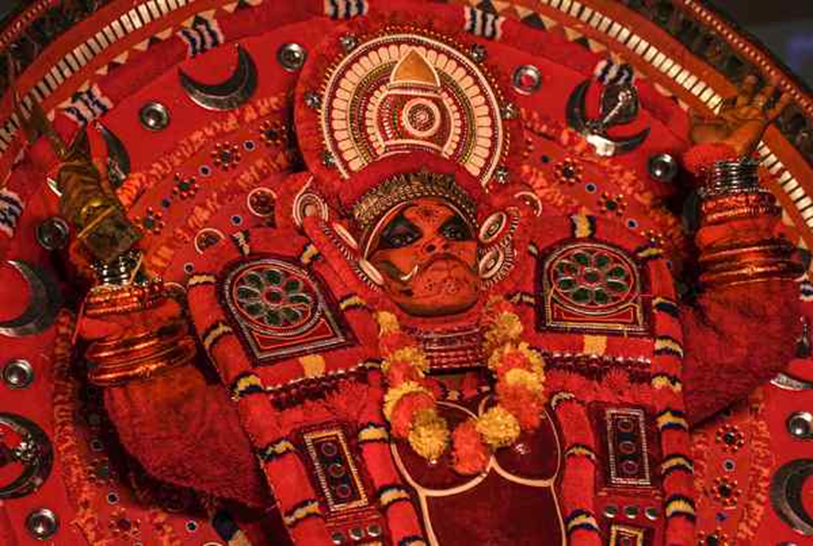
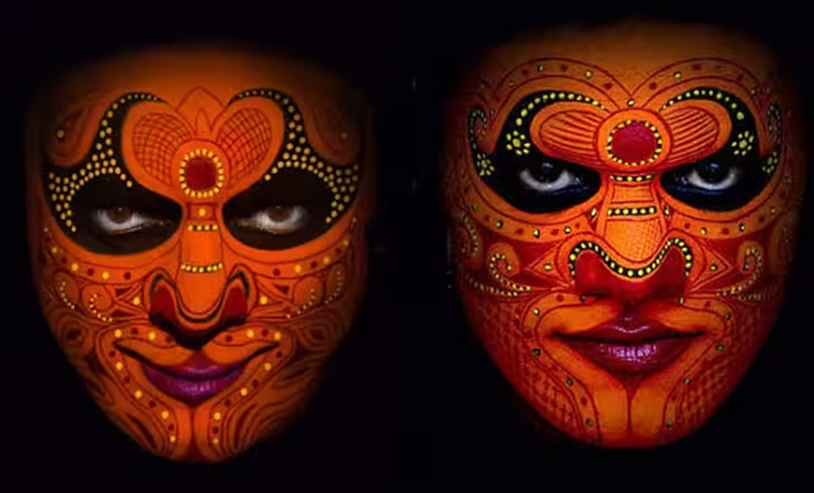
In NEWS: Theyyam, a ritual art form of northern Kerala, during an event in Bengaluru on Thursday
Theyyam:
- Theyyam is a ritualistic art form practiced in northern Kerala, especially in Kannur, Kasaragod, Kozhikode, and Wayanad districts. Hence option (b) is correct.
- The term Theyyam is derived from “Daivam”, meaning God.
- It is a living tradition of ancestor and hero worship, combining dance, music, mime, and ritual.
- Performers are believed to embody the deity during the ritual.
- Traditionally performed by Dalit and lower-caste communities, such as Malayan, Vannan, and Velan.
- Performed in sacred groves (Kavu), temples, or ancestral houses.
- The performances usually take place between October and May.
- Distinctive features include:
- Elaborate facial makeup
- Towering headgear (Mudi)
- Vivid costumes
- Use of traditional percussion instruments like Chenda and Elathalam.
- Theyyam is not merely a dance but a socio-religious institution, reflecting local history, ecology, and social order.
| PYQ REFERENCE: (2018) Q. Consider the following pairs of Tradition vs State: 1 . Chapchar Kut festival : Mizoram 2. Khongjom Parba ballad : Manipur 3. Thang-Ta dance : Sikkim Which of the pairs given above is/are correct ? (a) 1 only (b) 1 and 2 (c) 3 only (d) 2 and 3 |
10. Turkey is located between
(a) Black Sea and Caspian Sea
(b) Black Sea and Mediterranean Sea
(c) Gulf of Suez and Mediterranean Sea
(d) Gulf of Aqaba and Dead Sea
Answer: (b) Black Sea and Mediterranean Sea
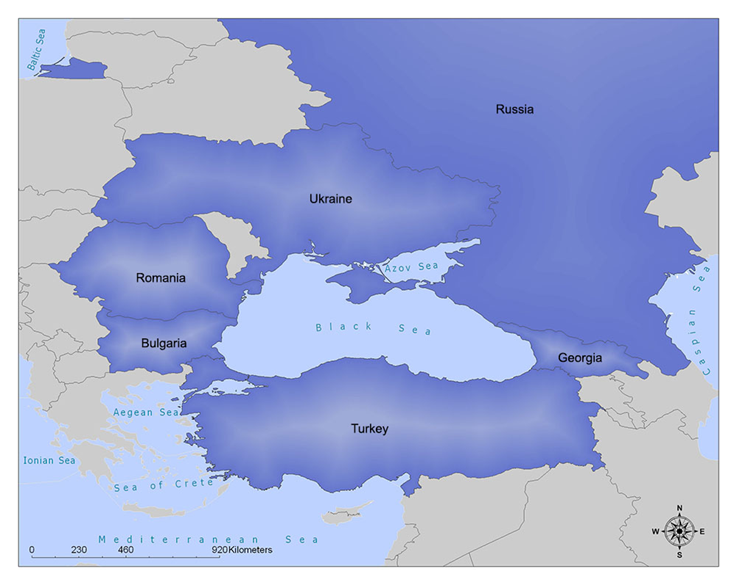
Hence option (b) is correct.