

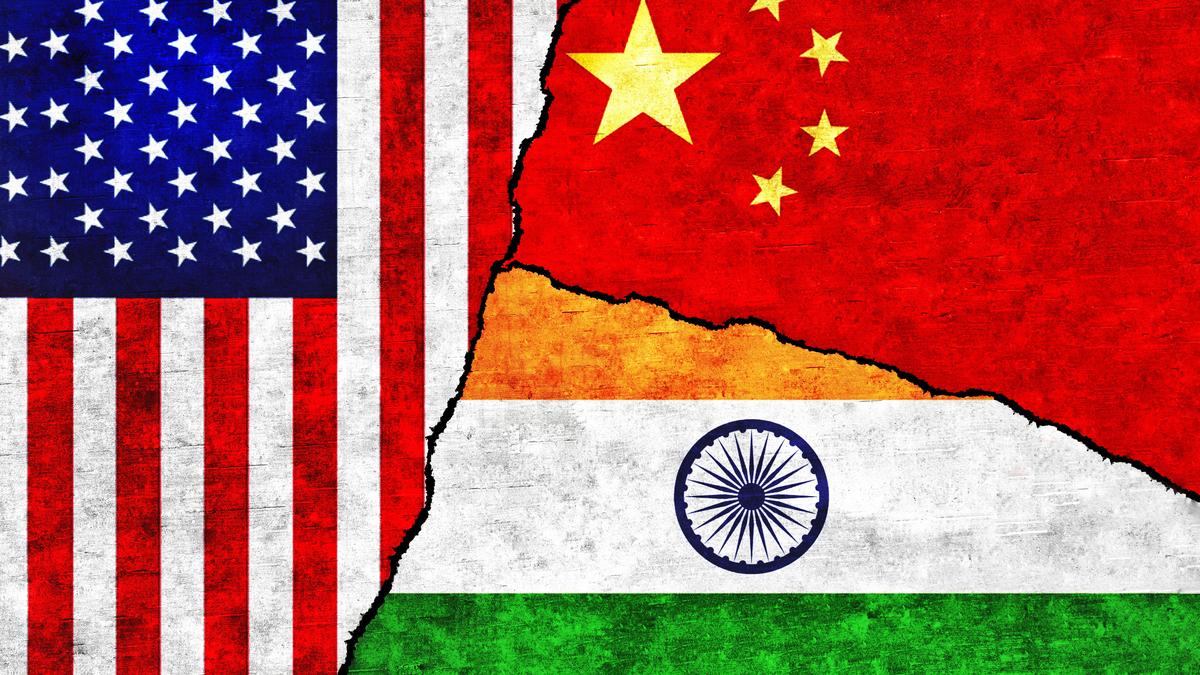
1. “The erosion of multilateralism is reshaping global power dynamics.” Examine how this shift affects India’s traditional foreign policy of strategic autonomy. Suggest a roadmap for India’s diplomatic recalibration.
| Syllabus: General Studies – II: Bilateral, Regional and Global Groupings and Agreements involving India and/or affecting India’s interests. |
IN NEWS: As multilateralism erodes, India must reframe its foreign policy
Multilateralism based on rules, international institutions, and collective decision-making has historically shaped global governance through bodies like the UN, WTO, and Bretton Woods institutions. However, the rise of great power competition, unilateral trade measures, and geopolitical fragmentation has weakened these structures.
This shift is forcing India to reassess its traditional foreign policy doctrine of strategic autonomy, which was rooted in multilateral engagement and non-alignment.
Erosion of Multilateralism and Changing Global Power Dynamics
1. Weakening of Global Institutions
- WTO dispute settlement mechanism paralysis due to U.S. opposition.
- Increasing bypassing of UN frameworks in security and economic matters.
- Rise of unilateral sanctions and protectionist trade policies.
2. Emergence of Power Politics
- Intensified U.S.–China strategic rivalry shaping global order.
- Formation of issue-based coalitions (Quad, AUKUS, IPEF).
- Shift from rule-based order to transactional bilateralism.
3. Fragmentation of Global South Consensus
- Diverging economic interests among developing countries.
- China’s growing leadership through Belt and Road Initiative and alternative institutions.
Impact on India’s Traditional Strategic Autonomy
1. Reduced Space for Neutral Balancing
- Cold War-era non-alignment allowed flexibility between blocs.
- Current geopolitical polarization pressures India to align on technology, security, and trade.
2. Limits of Multilateral Negotiation Strategy
- Earlier India leveraged multilateral platforms (climate negotiations, WTO) to protect developing country interests.
- Declining institutional effectiveness reduces India’s negotiating leverage.
3. Technology and Supply Chain Dependencies
- Strategic autonomy challenged by dependence on foreign technology ecosystems (semiconductors, AI, defence systems).
4. Rise of Issue-Based Partnerships
- India’s participation in Quad, Indo-Pacific strategies shows shift from strict autonomy to “multi-alignment.”
Need for Diplomatic Recalibration
1. Move from Strategic Autonomy to Strategic Multi-Alignment
- Engage simultaneously with U.S., EU, Russia, Japan, ASEAN, and Global South.
- Maintain flexibility rather than rigid neutrality.
2. Strengthening Endogenous Capabilities
- Focus on:
- Technological self-reliance (AI, cyber, space, defence).
- Manufacturing ecosystem (PLI schemes, supply chain resilience).
- Economic strength as foundation of foreign policy.
3. Trade Diversification and Economic Diplomacy
- Expand FTAs with EU, ASEAN, Africa, and Latin America.
- Reduce overdependence on any single market.
- Promote resilient global value chain integration.
4. Issue-Based Leadership in New Domains
- Digital public infrastructure (UPI, Aadhaar models).
- Climate diplomacy (International Solar Alliance).
- Global South representation through development partnerships.
5. Reforming and Leveraging Alternative Platforms
- Strengthen BRICS, SCO, G20 as flexible forums.
- Promote minilateral arrangements focused on specific sectors.
6. Balanced Engagement with Major Powers
- Security cooperation with the U.S.
- Defence and energy ties with Russia.
- Managed competition and economic engagement with China.
Challenges in Recalibration
- Border tensions with China.
- Technology restrictions from Western powers.
- Economic asymmetries and trade vulnerabilities.
- Managing domestic economic transformation alongside external commitments.
As multilateralism erodes and great-power competition intensifies, India’s traditional strategic autonomy must evolve into a pragmatic, capability-driven approach. By combining economic strength, technological leadership, diversified partnerships, and flexible diplomacy, India can safeguard sovereignty while shaping a multipolar global order aligned with its vision of Viksit Bharat 2047.
| PYQ REFERENCE Q. Do you think that BIMSTEC is a parallel organisation like the SAARC? What are the similarities and dissimilarities between the two? How are Indian foreign policy objectives realized by forming this new organisation? (2022) |
2. Artificial Intelligence is emerging as a key enabler of climate resilience and sustainable development. Discuss the role of AI in strengthening India’s climate adaptation and disaster risk management strategies.
| Syllabus: General Studies – III (Environment, Science & Technology) |
IN NEWS: AI and Climate Action in India – Innovations, and a Path to Sustainability
Climate change has intensified extreme weather events, rising sea levels, and ecological disruptions, posing significant risks to India’s economy and society. Artificial Intelligence (AI), through data-driven prediction, automation, and advanced analytics, is emerging as a transformative tool to enhance climate adaptation, disaster preparedness, and sustainable development.
Role of AI in Strengthening Climate Adaptation and Disaster Risk Management
1. AI-Enabled Weather Forecasting and Early Warning Systems
- AI-based models enhance prediction accuracy for cyclones, monsoons, floods, and heatwaves.
- Advanced techniques like AI-assisted cyclone intensity estimation improve evacuation planning.
- Indigenous weather models provide high-resolution forecasts at village level, improving preparedness.
2. Disaster Risk Reduction and Response
- AI-based landslide early warning systems using sensors and machine learning predict slope failures.
- Flood forecasting integrates AI with hydrological models for river basin management.
- Satellite imagery and machine vision enable rapid damage assessment after disasters.
3. Climate Modeling and Long-Term Adaptation Planning
- AI processes large climate datasets to identify trends and risk patterns.
- Ensemble climate models reduce uncertainty in rainfall and monsoon predictions.
- Supports infrastructure planning and climate-resilient policy formulation.
4. Agriculture and Grassroots Climate Resilience
- AI-driven weather advisories help farmers optimize sowing, irrigation, and harvesting decisions.
- Village-level forecasts democratize climate information.
- Precision agriculture reduces resource use and enhances productivity.
5. Environmental Monitoring and Ecosystem Protection
- AI-powered forest surveillance detects illegal encroachment, wildlife movement, and early forest fires.
- Coastal monitoring systems analyse sea-level rise and vulnerability zones.
- Air and water quality monitoring improves environmental governance.
6. Urban Climate Resilience
- AI supports smart city planning through real-time air quality monitoring and sustainable infrastructure management.
- Helps manage energy systems and reduce emissions.
Challenges and Limitations
- Data gaps and quality issues in remote regions.
- High infrastructure and computational requirements.
- Ethical concerns including algorithmic bias and data privacy.
- Need for skilled workforce and inter-agency coordination.
Way Forward
- Strengthen AI research infrastructure and indigenous models.
- Expand public-private partnerships and academia collaboration.
- Integrate AI outputs into governance frameworks and local planning.
- Enhance digital infrastructure for last-mile connectivity.
- Develop ethical AI standards and regulatory frameworks.
AI has the potential to transform India’s climate resilience by enabling accurate forecasting, effective disaster response, and sustainable resource management. By combining technological innovation with inclusive governance and grassroots implementation, India can leverage AI as a cornerstone of climate adaptation and advance toward its net-zero and sustainable development goals.
| PYQ REFERENCE Q. Introduce the concept of Artificial Intelligence (AI). How does AI help clinical diagnosis? Do you perceive any threat to privacy of the individual in the use of AI in healthcare? (2023) |
Source: https://www.pib.gov.in/PressReleasePage.aspx?PRID=2228662®=3&lang=1