

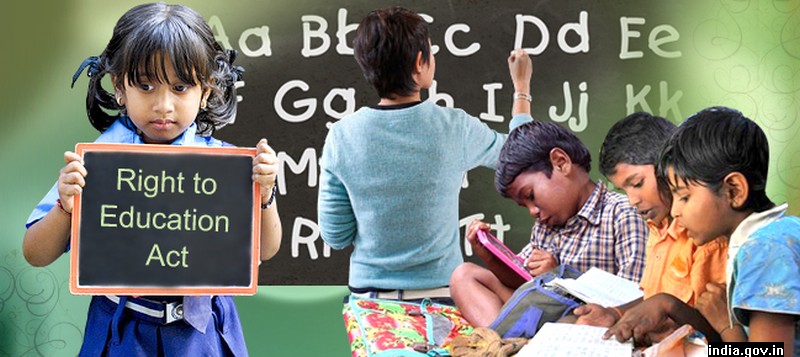
1. Analyse the ethical obligations of private schools in implementing Section 12(1)(c). How should conflicts between institutional autonomy and social justice be resolved?
| Syllabus: Ethics General Studies – : IV Public/Civil service values and Ethics in Public administration: Status and problems; ethical concerns and dilemmas in government and private institutions; laws, rules, regulations and conscience as sources of ethical guidance; accountability and ethical governance; strengthening of ethical and moral values in governance; ethical issues in international relations and funding; corporate governance. |
IN NEWS: The RTE Act and the idea of social inclusion
Section 12(1)(c) of the Right to Education (RTE) Act is a landmark provision in Indian law, mandating that private unaided schools reserve 25% of their entry-level seats for children from Economically Weaker Sections (EWS) and disadvantaged groups.
This creates a unique ethical tension between the private right to manage an institution and the public duty to foster an equitable society.
Ethical Obligations of Private Schools
The ethical framework for private schools under RTE is grounded in the concept of social distributive justice. While these schools are private entities, they operate within a social ecosystem and benefit from state-provided infrastructure (like land at concessional rates or tax exemptions).
- Integration and Non-Discrimination: Schools have a moral duty beyond mere admission. They must ensure that EWS students are not “ghettoized” within the school. This includes preventing social stigma and ensuring equal participation in all extracurricular activities.
- Equitable Resource Distribution: Ethically, schools must ensure that the quality of pedagogy and resources—from sports equipment to library access—is shared equally, regardless of the student’s fee-paying status.
- Fostering Empathy: Private schools serve as a microcosm of society. By implementing the quota, they fulfill an obligation to teach their “general category” students about diversity, privilege, and social reality, which is essential for holistic character building.
The Conflict: Institutional Autonomy vs. Social Justice
The tension arises because private schools often view themselves as autonomous “islands of excellence,” while the state views them as partners in the “public function” of education.
| Point of Conflict | Institutional Autonomy Perspective | Social Justice Perspective |
| Financial Viability | Schools argue that delayed government reimbursements threaten their financial health and quality of service. | Education is a “social good,” and private profits should not be prioritized over the fundamental right to education. |
| Pedagogical Freedom | Schools fear that state-mandated quotas interfere with their unique culture, mission, and selection criteria. | Diversity is a pedagogical strength. Homogeneous classrooms create “echo chambers” of privilege. |
| Administrative Control | Private management seeks total control over admissions to maintain specific standards. | State intervention is necessary to correct historical exclusions and systemic inequality. |
Resolving the Conflict
Resolving these tensions requires moving away from an “either-or” mindset toward a Collaborative Governance model.
1. The “Social Contract” Approach
Institutional autonomy is not an absolute right; it is a delegated power from the state. Schools should view the 25% mandate as a “social tax” for the privilege of operating within a democratic society. In return, the state must fulfill its end of the contract by providing timely and fair-market reimbursements to ensure the school’s viability is not compromised.
Example: Some schools in Delhi have implemented a “Uniformity Policy” where the cost of all mandatory trips is baked into the general fee structure or sponsored by the school’s alumni association to avoid pointing out who cannot pay.
2. Proportionality and Subsidiarity
Conflicts should be resolved using the principle of proportionality. The state should intervene in admissions (to ensure justice) but should refrain from micromanaging the school’s internal curriculum or religious/philosophical identity (preserving autonomy), provided that identity does not promote discrimination.
Example: Providing refurbished laptops from the school’s IT lab to EWS households during term time.
3. Inclusion over Integration
Integration is just “putting kids in the same room.” Inclusion is changing the room to accommodate everyone.
- Sensitivity Training: Mandatory training for staff to eliminate subconscious bias against EWS students.
- Bridge Courses: Schools should exercise their autonomy to create innovative “catch-up” programs that help disadvantaged students bridge the learning gap without lowering overall academic standards.
4. Judicial Balancing
As seen in the Society for Unaided Private Schools of Rajasthan v. Union of India case, the courts have upheld that the RTE Act does not violate the “right to carry on any occupation.” The resolution lies in the legal understanding that education is a mission, not a business.
Ultimately, the goal is to transform private schools from exclusive enclaves into inclusive communities. The resolution of the conflict lies in recognizing that institutional excellence and social justice are not mutually exclusive—rather, a school is only truly “excellent” if it can successfully educate a diverse demographic.
| PYQ REFERENCE UPSC 2022 Q. “Social values are more important than economic values. Discuss this statement with examples in the context of inclusive growth of a nation.” |
2. Case Study
2. A high-profile corruption case relating to an excise policy decision comes up before a High Court. The case involves a former Chief Minister, Mr. Raghavan, and other senior public officials. A trial court had earlier discharged the accused, but the State Anti-Corruption Bureau has challenged this decision. The matter is listed before a senior judge, Justice Meenakshi Iyer, who is widely regarded as competent and firm in her judicial approach. However, during earlier stages of the same case, she had made certain observations that were perceived as critical of the accused.
When the case is taken up, Mr. Raghavan, appearing in person, files a plea requesting the judge to recuse herself. He argues that her prior adverse remarks create a perception of pre-judgment. He further points out that the judge had attended events organised by a lawyers’ body perceived to be ideologically aligned with the ruling establishment. Additionally, a close family member of the judge is empanelled as legal counsel for the government, which is a party to the case. He also cites public statements made by influential political leaders expressing confidence about the outcome of the case. Based on these factors, he contends that there exists a reasonable apprehension of bias, even if no actual bias can be proven.
| Syllabus: Ethics General Studies – : IV Attitude: content, structure, function; its influence and relation with thought and behavior; moral and political attitudes; social influence and persuasion. |
IN NEWS: A recusal test the Delhi High Court failed
Justice Iyer refuses to recuse herself and passes an order stating that judges cannot step aside merely on the basis of unfounded or speculative allegations, as it may encourage litigants to indulge in “bench hunting.” She emphasises that there is a presumption of judicial impartiality and that recusal must be based on concrete evidence of bias rather than perceptions. She further asserts that her professional and personal associations do not influence her judicial decisions.
Questions:
1. Identify and discuss the ethical issues involved in the above case.
2. Examine the distinction between “actual bias” and “reasonable apprehension of bias” in the context of judicial conduct.
3. Suggest institutional measures to ensure transparency and fairness in handling recusal requests in the judiciary.
ANSWER:
1. Identify and discuss the ethical issues involved in the above case.
1. Ethical Issues Involved
Several ethical dimensions emerge from this scenario, centering on the Bangalore Principles of Judicial Conduct:
- Impartiality vs. Duty to Sit: Justice Iyer faces the ethical dilemma of “duty to sit.” While a judge should not hear a case where bias exists, they also have an ethical obligation not to recuse themselves too easily, as doing so allows litigants to engage in “forum shopping” or “bench hunting,” effectively choosing their own judge by making strategic allegations.
- Conflict of Interest (Familial Ties): The fact that a close family member is empanelled for the government (a party in the case) creates a potential conflict. Even if the relative is not arguing this specific case, the financial or professional benefit to the family unit can cloud the perception of neutrality.
- Appearance of Propriety: Ethical conduct for a judge extends beyond the courtroom. Attending events organized by ideologically aligned bodies, while perhaps personally innocent, can ethically compromise the “appearance” of neutrality required by the high office.
- Pre-judgment vs. Judicial Observations: Judges often make “interim observations” to seek clarifications. The ethical issue here is whether those observations crossed the line from legal inquiry to a fixed opinion, which would violate the principle that every party deserves an open-minded hearing.
2. Examine the distinction between “actual bias” and “reasonable apprehension of bias” in the context of judicial conduct.
Actual Bias vs. Reasonable Apprehension of Bias
The legal and ethical standards for recusal generally distinguish between these two benchmarks:
| Feature | Actual Bias | Reasonable Apprehension of Bias |
| Definition | Concrete evidence that the judge has a personal interest or a fixed prejudice that will dictate the outcome. | A situation where a “fair-minded and informed observer” would conclude there is a real possibility of bias. |
| Proof Required | High; requires proving the judge’s subjective state of mind or a direct financial stake. | Objective; focuses on outward circumstances and public perception. |
| Focus | The Fact of Partiality. | The Appearance of Partiality. |
| Judicial Maxim | “Justice must be done.” | “Justice must not only be done, but must also be seen to be done.“ |
In this case, while there may be no “actual bias” (Justice Iyer may truly be impartial), the combination of a family member’s employment by the State and prior critical remarks likely meets the threshold for a reasonable apprehension of bias.
Suggest institutional measures to ensure transparency and fairness in handling recusal requests in the judiciary.
Institutional Measures for Transparency and Fairness
To move away from the current system where the judge being challenged is the sole arbiter of their own recusal, the following measures could be implemented:
- Reasoned Orders: Making it mandatory for judges to pass a detailed, written “speaking order” when accepting or rejecting a recusal plea. This ensures the decision is subject to legal scrutiny rather than being a purely discretionary act.
- Independent Review Mechanism: For high-profile cases, a recusal plea could be referred to a separate “Recusal Committee” or the Chief Justice of that court to provide an objective third-party assessment.
- Uniform Guidelines: Establishing a clear code of conduct or “Recusal Rules” that define specific “Automatic Disqualification” triggers (e.g., immediate family members representing a party). This removes the burden of “perception” by creating clear red lines.
- Full Disclosure Protocol: At the beginning of a case, judges could provide a voluntary disclosure of any potential links (memberships, family roles, or past representation) to the parties involved, allowing for transparency before the trial begins.
- Cooling-off Periods: Guidelines regarding judicial participation in politically or ideologically charged public events to prevent the perception of alignment with the “ruling establishment.”