

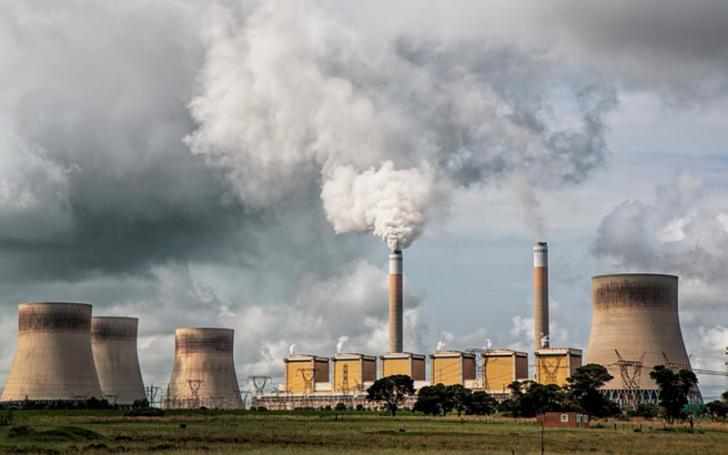
1. Air pollution in India, particularly in the Indo-Gangetic Plains, is increasingly influenced by transboundary sources. Explain why India must cooperate with its neighbouring countries to improve air quality. Examine the status of regional and international efforts undertaken so far.
| Syllabus: General Studies – III: Conservation, environmental pollution and degradation, environmental impact assessment |
IN NEWS: Expert Explains: Why India needs to work with its neighbours to improve air quality, status of efforts so far
The Indo-Gangetic Plains (IGP) and Himalayan Foothills form a single transboundary airshed, home to nearly 40% of South Asia’s population. According to the World Bank (2025), in many parts of the IGP, only around 60% of PM₂.₅ pollution is locally generated, highlighting the growing influence of cross-border emissions and the necessity of regional cooperation.
Need for India to Cooperate with Neighbouring Countries
1. Transboundary Transport of Pollutants
- Winter north-westerly winds transport particulate matter from Pakistan’s Punjab into Indian Punjab and Haryana.
- World Bank estimates suggest up to 30% of winter PM₂.₅ in Indian Punjab originates across the border.
- In Nepal’s Terai, about 68% of air pollution is estimated to originate from neighbouring countries, affecting eastern India.
2. Scientific Evidence of Long-Range Transport
- A modelling study by IIT Bombay shows that PM₂.₅ can travel hundreds of kilometres, contributing to pollution in Delhi-NCR, eastern Uttar Pradesh, Bihar, and the Himalayan foothills.
- This undermines city-centric approaches under the National Clean Air Programme (NCAP).
3. Shared Health and Economic Burden
- According to the Global Burden of Disease (GBD) Report, air pollution causes over 1.6 million premature deaths annually in India.
- The World Bank estimates that air pollution costs India over 8% of GDP due to health expenditure and productivity losses, impacts that spill across borders.
4. Ecological and Climate Linkages
- Black carbon deposition accelerates Himalayan glacier melt, threatening regional water security for countries sharing Indus–Ganga–Brahmaputra basins.
- Short-lived climate pollutants (SLCPs) link air quality with climate change, demanding coordinated mitigation.
Status of Regional and International Efforts
1. Regional Cooperation in South Asia
- Malé Declaration (1998):
- Focused on monitoring, data sharing, and capacity building.
- Supported by SIDA (1999–2013); progress slowed after funding withdrawal.
- Currently being revived with a new work plan and resource mobilisation focus.
- ICIMOD–World Bank IGP-HF Initiative:
- Led to Kathmandu Roadmap (2022) and Thimphu Outcome (2024).
- Emphasises:
- Harmonised emission inventories
- Shared air-quality monitoring
- Coordinated PM₂.₅ reduction strategies
2. International Platforms
- Climate and Clean Air Coalition (CCAC):
- India collaborates on reducing methane and black carbon.
- WMO Global Atmosphere Watch (GAW):
- IMD contributes long-term atmospheric composition data, aiding modelling of transboundary pollution.
3. Domestic Alignment with Regional Thinking
- Commission for Air Quality Management (CAQM):
- Statutory body (2021) managing Delhi–NCR as an airshed.
- 15th Finance Commission:
- Performance-linked air quality grants to urban local bodies, though utilisation remains uneven due to city-centric implementation.
While India has recognised the transboundary nature of air pollution through regional dialogues and domestic institutional reforms, South Asia lacks a binding legal framework and sustained financing. Strengthening regional institutions, adopting an airshed-based governance model, and aligning air quality goals with health and climate objectives are essential for meaningful and durable air quality improvement in the Indo-Gangetic Plains.
| PYQ REFERENCE Q. Mumbai, Delhi and Kolkata are the three mega cities of the country but the air pollution is a much more serious problem in Delhi as compared to the other two. Why is this so? (2015) |
2. Discuss the rationale behind introducing legally binding equity and anti-discrimination regulations in higher education institutions. What are the key challenges in ensuring both social justice and procedural fairness under the new UGC framework?
| Syllabus: General Studies – II: Mechanisms, laws, institutions and Bodies constituted for the protection and betterment of these vulnerable sections. |
IN NEWS: UGC’s new regulations to deal with caste-based discrimination and the opposition to them
Higher education institutions in India have historically been marked by social inequities and under-representation of marginalized communities, particularly Scheduled Castes (SC), Scheduled Tribes (ST), Other Backward Classes (OBC), Economically Weaker Sections (EWS), and persons with disabilities.
Background:
- Earlier, the University Grants Commission (UGC) 2012 guidelines recommended affirmative action and anti-discrimination measures which were largely advisory.
- In January 2026, the UGC introduced the University Grants Commission (Promotion of Equity in Higher Education Institutions) Regulations, 2026, making equity and anti-discrimination measures legally binding, to operationalize constitutional values of equality (Art. 14), non-discrimination (Art. 15), and right to education (Art. 21A).
Rationale behind Legally Binding Regulations
1. Ensuring Social Justice on Campuses
- Address long-standing marginalization of SC/ST/OBC/EWS students and faculty.
- Create mechanisms for representation, grievance redressal, and affirmative action in recruitment, admissions, and campus life.
2. Institutional Accountability
- Mandatory Equity Committees, Equal Opportunity Centres, Equity Ambassadors, and 24×7 helplines ensure timely action.
- Non-compliance can impact funding, linking institutional incentives with equity outcomes.
3. Uniformity Across Institutions
- Previously, colleges/universities had diverse policies; legally binding regulations ensure minimum standards and harmonization.
- Enables consistent data collection, monitoring, and reporting on equity outcomes.
4. Legal Certainty for Vulnerable Groups
- Provides clarity of rights and structured procedures to file complaints, reducing under-reporting of discrimination.
Key Challenges in Ensuring Social Justice and Procedural Fairness
1. Vague Definitions and Scope
- Terms like “implicit discrimination” or “systemic bias” are subjective and may lead to misinterpretation or misuse.
2. Institutional Autonomy Concerns
- Strict enforcement mechanisms, reporting requirements, and oversight by UGC may be seen as interfering in campus governance.
3. Implementation and Capacity Gaps
- Many institutions lack trained personnel, resources, and functional committees, leading to uneven enforcement.
- Effective grievance redressal requires awareness, transparency, and impartial adjudication, which are challenging in practice.
4. Legal and Constitutional Scrutiny
- The Supreme Court has stayed parts of the regulations, particularly regarding definitions of caste discrimination, highlighting potential conflicts with due process and constitutional rights.
The UGC’s 2026 regulations represent a progressive step toward embedding social justice in higher education. However, ensuring procedural fairness, institutional buy-in, and clear definitions is essential to prevent misuse and uphold constitutional principles. Strengthening training, monitoring, and legal safeguards, alongside stakeholder engagement, will be critical for achieving both equity and fairness on campuses.
| PYQ REFERENCE Q. Development and welfare schemes for the vulnerable, by its nature, are discriminatory in approach.” Do you agree? Give reasons for your answer. (2023) |