

1. A young IAS officer known for integrity finds that corruption is deeply embedded in the administrative ecosystem. Senior colleagues argue that “practical governance requires compromise,” while the officer believes in strict adherence to ethical principles. Facing resistance, the officer contemplates whether to continue working within the system or leave to maintain personal integrity.
| Syllabus: General Studies – IV: Ethics (Case Studies) – Public/Civil Service Values and Ethics in Public Administration. |
IN NEWS: When an honest civil servant resigns, is it a failure of the ‘system’ or a test of ethics?
a. Analyse the conflict between idealism and pragmatism in public service.
b. How can a civil servant balance integrity with administrative effectiveness?
c. Discuss the role of moral courage and emotional intelligence in such situations.
d. Suggest strategies for ethical leadership within a compromised system.
Public administration often presents a tension between idealistic ethical values and pragmatic governance realities. Civil servants are expected to maintain integrity while ensuring efficient service delivery within complex political and institutional environments. The case reflects the classic ethical dilemma between personal morality and systemic pressures.
Conflict between Idealism and Pragmatism in Public Service
Idealism
- Emphasises strict adherence to ethical principles such as honesty, transparency, and rule of law.
- Rooted in deontological ethics (Kantian duty-based approach) — actions must be morally right regardless of consequences.
- Builds public trust and long-term institutional credibility.
Pragmatism
- Focuses on practical outcomes, efficiency, and political realities.
- Sometimes justifies minor compromises to achieve administrative goals.
- Linked with utilitarian ethics, prioritising outcomes over rigid rules.
Conflict
- “Ends vs means” dilemma.
- Risk of ethical erosion when compromises become normalised.
- Labelling ethical officers as “rigid” creates isolation and moral distress.
Balancing Integrity with Administrative Effectiveness
a) Ethical Decision-Making Framework
- Identify legal, ethical, and public interest dimensions.
- Apply proportionality — differentiate between flexibility and ethical compromise.
b) Strategic Integrity
- Work within rules creatively rather than rigidly.
- Use institutional mechanisms such as audits, transparency norms, and documentation.
c) Stakeholder Engagement
- Build alliances with like-minded officials.
- Use participatory governance to reduce resistance.
d) Incremental Reform
- Gradual systemic change rather than confrontational approaches.
Example: Officers like T.N. Seshan or Ashok Khemka used legal tools and institutional frameworks to uphold integrity.
Role of Moral Courage and Emotional Intelligence
Moral Courage
- Willingness to uphold ethical values despite risks.
- Prevents normalization of unethical practices.
- Enhances credibility and inspires organisational change.
Emotional Intelligence (EI)
- Self-awareness to manage frustration and isolation.
- Empathy to understand institutional constraints.
- Relationship management to influence colleagues without alienation.
- EI allows ethical leadership without becoming confrontational or ineffective.
Strategies for Ethical Leadership within a Compromised System
- Lead by example and maintain personal integrity.
- Strengthen transparency through digital governance and documentation.
- Use whistleblower protections where necessary.
- Build ethical organisational culture through training and mentoring.
- Encourage accountability mechanisms.
- Seek institutional support rather than acting alone.
Resigning may preserve personal integrity but limits the opportunity for systemic reform. Ethical leadership lies in combining moral courage with strategic pragmatism, enabling civil servants to remain within the system and gradually transform governance towards integrity and public welfare.
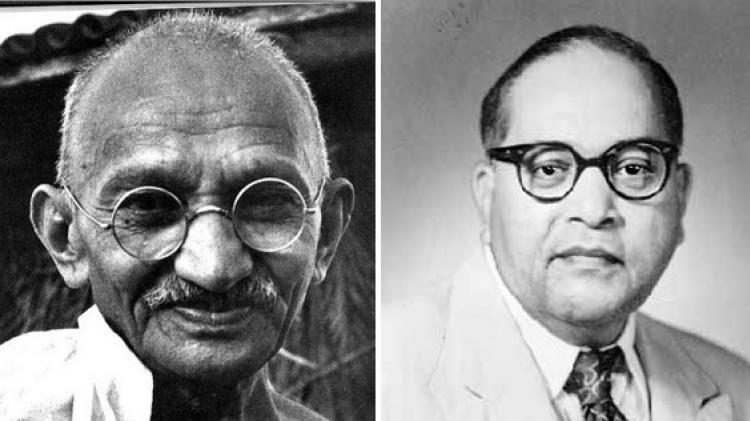
2. Compare and contrast the ideological perspectives of Mahatma Gandhi and B. R. Ambedkar on social reform and modernity in India.
| Syllabus: General Studies – I: Modern Indian History from about the middle of the eighteenth century until the present – significant events, personalities, issues. |
IN NEWS: Ideological differences between Mahatma Gandhi and B. R. Ambedkar and scientific development in India
Mahatma Gandhi and B. R. Ambedkar were two towering leaders who profoundly shaped India’s social reform discourse. While both aimed at transforming Indian society and achieving justice, their approaches differed significantly regarding caste, social equality, modernity, and the role of institutions.
Comparison of Ideological Perspectives: Mahatma Gandhi vs B. R. Ambedkar
| Aspect | Mahatma Gandhi | B. R. Ambedkar |
| Overall Objective | Transform Indian society through moral regeneration and ethical reform | Achieve social justice through structural transformation and legal safeguards |
| Commitment to Social Reform | Opposed untouchability; worked for Harijan upliftment | Fought for Dalit rights and social emancipation |
| Vision of Inclusive India | Social harmony through ethical transformation | Equality through rights-based empowerment |
| Approach to Caste System | Accepted varna as division of labour but opposed untouchability; reform within Hindu society | Viewed caste as inherently oppressive; advocated annihilation of caste |
| Strategy for Social Reform | Moral persuasion, self-purification, community reform | Legal safeguards, political representation, constitutional methods |
| Vision of Modernity | Critical of Western industrial modernity; promoted Gram Swaraj, simplicity, decentralisation | Supported industrialisation, urbanisation, scientific progress for social mobility |
| Role of State and Institutions | Preferred minimal state intervention; emphasised ethical communities | Strong belief in constitutionalism, institutional safeguards, state-led reforms |
| Method of Political Action | Non-violent mass mobilisation and moral leadership | Constitutional politics, legal activism, representation of marginalised groups |
| Critical Perspective | Emphasis on social cohesion but criticised for limited structural challenge to caste | Focus on structural transformation and equality through institutional change |
| Contemporary Relevance | Influences debates on sustainable development and decentralisation | Shapes affirmative action policies and rights-based governance |
Gandhi and Ambedkar offered distinct yet intersecting perspectives on social reform and modernity. Gandhi focused on moral and community-driven change, whereas Ambedkar emphasised legal, institutional, and scientific approaches. Their combined legacy continues to shape India’s quest for social justice and modern development.
| PYQ REFERENCE Q. Mahatma Gandhi and Dr. B. R. Ambedkar, despite having divergent approaches and strategies, had a common goal of amelioration of the downtrodden. Elucidate. (2015) |