

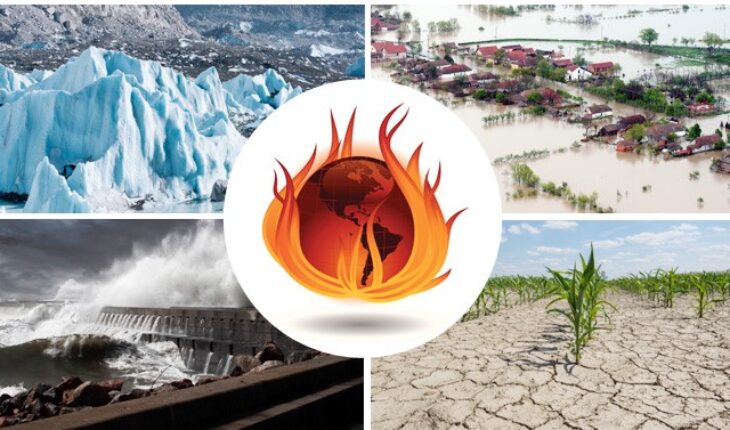
1. “India’s climate governance gap lies not in the lack of scientific data but in the failure of effective climate communication.” Critically examine the statement in the context of climate adaptation and disaster management in India.
| Syllabus: General Studies – III: Conservation, environmental pollution and degradation, environmental impact assessment |
IN NEWS: India’s biggest climate gap could be language
India has made significant advances in climate science, including high-resolution climate modelling, early warning systems, and disaster risk assessments. However, recurring losses from heatwaves, floods, cyclones, and droughts indicate that the challenge lies less in data availability and more in translating scientific knowledge into actionable, accessible, and trusted communication, especially for climate adaptation and disaster management.
The Gap Is Not Scientific Data
1. Robust Climate Science Base
- District-level heat action plans, flood inundation models, cyclone tracking, and crop yield simulations are now available.
- Attribution studies increasingly link extreme events to climate change.
2. Advanced Early Warning Systems
- IMD cyclone and heatwave forecasts have improved accuracy and lead time.
- NDMA and State Disaster Management Authorities possess technical risk assessments.
Communication Failures in Climate Adaptation and Disaster Management
1. Technocratic Language and Jargon
- Climate concepts such as “return periods”, “heat index”, or “loss and damage” are poorly understood at district and community levels.
- Global concepts are domestically reduced to aapda rahat and compensation, ignoring slow-onset and non-economic losses.
2. Mismatch with Lived Realities
- Heat advisories assume the ability to stop outdoor work.
- Flood warnings assume literacy, smartphone access, and risk comprehension.
3. Underutilised Decision Tools
- Risk dashboards and vulnerability indices are complex and not aligned with real-time administrative decision-making under pressure.
4. Trust Deficit
- Communities act on warnings only when alerts are credible and consistent.
- Odisha’s cyclone success highlights that trust, not technology alone, determines outcomes.
Implications for Climate Adaptation
- Poor communication narrows policy responses to post-disaster relief instead of anticipatory adaptation.
- Non-economic losses (culture, livelihoods, ecosystems) remain invisible in planning.
- Climate finance and investments fail to target the most vulnerable effectively.
Critical Perspective: Data and Institutions Still Matter
- In some regions, data gaps persist (urban floods, informal settlements).
- Weak institutional capacity and inter-departmental coordination also constrain adaptation.
- Communication cannot compensate for inadequate infrastructure or social protection.
Way Forward
1. Localise climate information into regional languages and contexts.
2. Translate projections into everyday consequences (health, work, mobility).
3. Institutionalise climate communication units within governments.
4. Co-create messages with frontline workers, panchayats, and local media.
5. Build trust through consistency, transparency, and community engagement.
India’s climate governance challenge is increasingly one of translation rather than prediction. Without effective communication, scientific advances remain locked in reports and dashboards. Strengthening climate communication alongside data, institutions, and finance can convert knowledge into action and make climate resilience a shared societal endeavour.
| PYQ REFERENCE Q. ‘Clean energy is the order of the day.’ Describe briefly India’s changing policy towards climate change in various international fora in the context of geopolitics (2022) |
2. India’s demographic transition is marked by sharp inter-State disparities in ageing and workforce composition. Examine the governance and federal implications of uneven ageing across Indian States.
| Syllabus: General Studies – II: Issues relating to development and management of Social Sector/Services relating to Health, Education, Human Resources. |
IN NEWS: Mind the time – India needs public-funded geriatric care to take care of its elderly
India’s demographic transition is uneven across States, with southern States such as Kerala and Tamil Nadu ageing rapidly, while northern States like Uttar Pradesh and Bihar continue to experience growth in their working-age populations. This divergence creates asymmetric governance and federal challenges, as public finance, political representation, and social policy frameworks are not uniformly aligned with varying demographic realities.
Governance Implications of Uneven Ageing
1. Fiscal Stress on Ageing States
- Higher old-age dependency ratios increase expenditure on pensions, healthcare, and social security.
- At the same time, ageing States face slower revenue growth due to a shrinking workforce.
2. Mismatch Between Needs and Resource Allocation
- Central schemes often adopt uniform design, ignoring State-specific demographic structures.
- Ageing States require expanded geriatric care, while youthful States need education and skill investments.
3. Strain on Administrative Capacity
- Health systems must shift from maternal-child care to chronic and geriatric care in ageing States
- Youthful States face governance challenges related to employment generation and urbanisation.
4. Erosion of Informal Care Systems
- Migration and nuclear families weaken traditional family-based elderly support, increasing dependence on state systems.
Federal Implications
1. Finance Commission Devolution Concerns
- Population-based weightage favours youthful States, reducing fiscal space for ageing States that successfully stabilised population growth.
- This raises issues of horizontal equity and incentive compatibility.
2. Political Representation and Delimitation
- Ageing and low-fertility States risk reduced parliamentary representation despite better human development outcomes.
- This could distort policy priorities at the national level.
3. Inter-State Labour Mobility
- Ageing States increasingly depend on migrant labour from youthful States, necessitating cooperative federal mechanisms for labour welfare.
4. Centre–State Policy Tensions
- Central fiscal advice such as subsidy rationalisation may conflict with social protection needs of ageing States.
Way Forward
- Adopt demographically differentiated policies in fiscal transfers and social sector schemes.
- Expand public-funded geriatric care and social pensions in ageing States.
- Invest in education, skills, and healthcare in youthful States to convert demographic potential into dividend.
- Strengthen cooperative federalism through flexible scheme design and incentive-based transfers.
Uneven ageing transforms India’s demographic transition from a national trend into a federal governance challenge. Addressing it requires moving beyond uniform policy prescriptions towards a nuanced, equity-based federal framework that recognises diverse demographic realities while ensuring balanced development across States.
| PYQ REFERENCE Q. “Demographic Dividend in India will remain only theoretical unless our manpower becomes more educated, aware, skilled and creative.” What measures have been taken by the government to enhance the capacity of our population to be more productive and employable? (2016) |