

1. “Wetlands are not wastelands but working ecosystems that underpin India’s water security, disaster resilience and cultural heritage.” Discuss
| Syllabus: General Studies – III: Conservation, environmental pollution and degradation, environmental impact assessment |
IN NEWS: Wetlands as a national public good
Wetlands in India have often been misclassified as wastelands, resulting in their encroachment and degradation. However, wetlands are working ecosystems that deliver vital ecological services, support livelihoods and preserve cultural traditions, making them integral to India’s sustainable development and resilience.
Wetlands and Water Security
- Hydrological regulation:
- Recharge groundwater aquifers
- Maintain base flows in rivers
- Store and slowly release surface water
- Water quality improvement:
- Natural filtration of pollutants and sediments
- Traditional water systems:
- Cascading tank (kulam) systems of Tamil Nadu
- Kenis of Wayanad for drinking water and irrigation
Their degradation has contributed to urban flooding, groundwater depletion and water scarcity.
Wetlands and Disaster Resilience
- Flood mitigation: Floodplains and urban wetlands absorb excess rainfall
- Coastal protection: Mangroves and mudflats reduce storm surge and wave energy
- Climate change adaptation: Act as nature-based solutions against extreme weather events
- Treating wetlands as vacant land increases disaster vulnerability, especially under climate change.
Wetlands as Cultural Heritage and Livelihood Systems
- Livelihood support:
- Inland and coastal fisheries
- Paddy cultivation
- Grazing and ecotourism
- Cultural significance:
- Rituals, festivals and community identity linked to wetlands
- Traditional knowledge:
- Community-managed fishing practices in Andhra Pradesh
- Sustainable water-sharing norms
These systems ensured wise use and long-term sustainability.
Governance Gaps and Current Challenges
- Nearly 40% of wetlands lost in the last three decades
- Drivers:
- Urbanisation and infrastructure expansion
- Hydrological disruption (dams, embankments, sand mining)
- Pollution from untreated sewage and industrial effluents
- Weak implementation of:
- Wetlands (Conservation and Management) Rules, 2017
- Catchment-level and participatory planning
Way Forward
- Treat wetlands as national public goods
- Ensure:
- Proper notification and boundary demarcation
- Catchment-based management
- Treated wastewater inflows
- Capacity building of wetland authorities
- Integrate traditional knowledge with scientific management
Wetlands are not wastelands but living infrastructure critical to India’s water security, disaster risk reduction and cultural continuity. Protecting them requires aligning science, policy and people to ensure resilient and sustainable ecosystems.
| PYQ REFERENCE Q. Comment on the National Wetland Conservation Programme initiated by the Government of India and name a few India’s wetlands of international importance included in the Ramsar Sites. (2023) |
Source:https://www.thehindu.com/opinion/lead/wetlands-as-a-national-public-good/article70584287.ece
2. Thorium-based nuclear power is central to India’s long-term energy independence. Discuss the strategic rationale behind India’s three-stage nuclear programme and examine how the expansion of PHWR capacity can accelerate the transition to the thorium cycle.
| Syllabus: General Studies – III: Infrastructure: Energy |
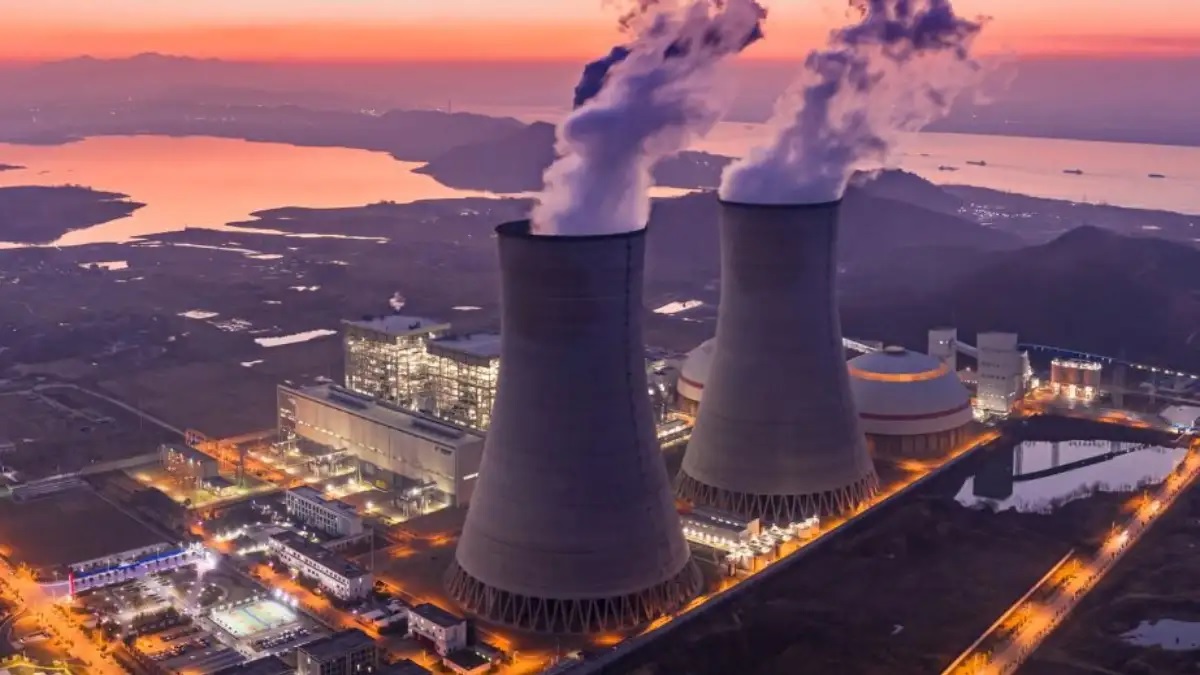
IN NEWS: Why Thorium-based nuclear power generation is key to securing India’s energy independence
India accounts for nearly 18% of the world’s population but holds barely 1–2% of global uranium reserves, while possessing about 25% of the world’s thorium resources, largely in monazite sands along its coasts. This structural mismatch between energy demand and fuel availability compelled India to design a unique three-stage nuclear programme, with thorium-based power as the ultimate pillar of long-term energy independence.
Strategic Rationale of India’s Three-Stage Nuclear Programme
Stage I – Pressurised Heavy Water Reactors (PHWRs)
- Use natural or lightly enriched uranium
- Produce electricity and plutonium-239 as a by-product
- Build foundational nuclear capacity with indigenous technology
Example: 220 MWe and 700 MWe PHWRs operated by NPCIL form the backbone of India’s nuclear fleet.
Stage II – Fast Breeder Reactors (FBRs)
- Use plutonium to breed additional fissile material
- Multiply fuel resources and support capacity expansion
- Intended to create irradiation platforms for thorium
Challenge: Delays in large-scale deployment of FBRs (e.g., PFBR at Kalpakkam) have slowed fissile material accumulation.
Stage III – Thorium-Based Nuclear Power
- Converts thorium into Uranium-233 (U-233)
- Enables self-sustaining and long-duration nuclear power
- Minimises external fuel dependence and enhances strategic autonomy
Technologies envisioned: Advanced Heavy Water Reactors (AHWRs) and Thorium Molten Salt Reactors.
Expansion of PHWR Capacity can accelerates the Thorium Transition
- Post–India-NSG waiver, access to imported uranium has enabled rapid expansion of PHWR capacity
- Government targets ~100 GWe nuclear power, with PHWRs constituting the bulk
- PHWRs can be used to irradiate thorium alongside advanced fuels such as HALEU
- This enables early and large-scale production of U-233, without waiting for full FBR deployment
- Thorium-HALEU fuel combinations:
- Improve fuel burn-up
- Reduce overall fuel cycle cost
- Offer safety and non-proliferation advantages
PHWRs thus act as a bridge technology between uranium-based reactors and the thorium phase.
Strategic, Economic and Climate Co-benefits
- Enhances energy sovereignty by relying on domestic fuel
- Provides stable baseload power to complement renewables
- Supports India’s net-zero and clean energy commitments
- Aligns with Viksit Bharat 2047 energy goals
Thorium-based nuclear power is not a distant aspiration but a strategic necessity for India. By leveraging the expanding PHWR fleet as irradiation platforms for thorium conversion, India can overcome delays in fast breeder deployment and decisively move towards a self-reliant, secure and sustainable nuclear energy future, realising the full promise of its three-stage nuclear vision.
Thorium is India’s pathway from nuclear capability to nuclear sovereignty.
| PYQ REFERENCE Q. With growing energy needs should India keep on expanding its nuclear energy programme? Discuss the facts and fears associated with nuclear energy. (2018) |