

1. “The Ethanol Blended Petrol (EBP) Programme aims to improve energy security, support farmers, and reduce environmental impacts. Critically examine the successes and challenges faced by the programme in achieving these multiple objectives.”
| Syllabus: General Studies – : III Indian Economy – Mobilization of resources, growth and development, Environment – Environmental pollution and degradation, climate change mitigation. Science & Technology – Renewable energy and biofuels. |
IN NEWS: The E20 transition:fuel for debate
The Ethanol Blended Petrol (EBP) Programme, launched in 2003 and accelerated through the National Policy on Biofuels (2018, amended 2022), aims to blend ethanol with petrol to reduce crude oil imports, enhance farmers’ incomes, and support India’s energy transition.
Successes of the EBP Programme
1. Strengthening Energy Security
- Reduces dependence on imported crude oil and diversifies India’s energy basket.
- Contributes to the vision of Atmanirbhar Bharat and energy independence by 2047.
- Example: Achievement of 20% blending (E20) has significantly reduced petrol consumption.
2. Enhancing Farmers’ Income
- Creates additional demand for sugarcane, maize, and surplus food grains.
- Provides assured markets through procurement by Oil Marketing Companies (OMCs).
- Example: Sugar mills have benefited from ethanol diversion, enabling faster payment of cane dues to farmers.
3. Supporting Rural Economy
- Expansion of distilleries and biofuel infrastructure generates rural employment.
- Encourages value addition in the agricultural sector.
4. Environmental Benefits
- Ethanol burns cleaner than petrol, reducing carbon monoxide and particulate emissions.
- Supports India’s Panchamrit commitments, Net Zero target (2070), and updated NDCs.
5. Strengthening the Sugar Sector
- Diversion of surplus sugar towards ethanol production reduces excess stock accumulation.
- Example: Ethanol procurement has improved the financial health of sugar mills.
6. Policy and Institutional Support
- National Policy on Biofuels, 2018
- Pradhan Mantri JI-VAN Yojana for 2G ethanol plants.
- SATAT Initiative promoting compressed biogas and biofuel ecosystem.
- Interest subvention schemes for setting up distilleries.
Challenges Faced by the Programme
- Diversion of food grains and agricultural produce towards fuel production may affect food security and prices.
2. Water-Intensive Feedstock
- Sugarcane cultivation requires large quantities of water.
- Concentration in states like Maharashtra raises sustainability concerns.
3. Environmental Trade-offs
- Intensive cultivation can increase groundwater depletion and fertilizer usage.
4. Infrastructure Gaps
- Limited storage, transportation, and blending facilities in several regions.
- Uneven distribution of distilleries across states.
5. Technology Constraints
- Heavy dependence on 1G ethanol (sugarcane and grains).
- Slow commercialization of 2G ethanol from agricultural residues.
6. Vehicle Compatibility
- Full benefits of E20 require flex-fuel compatible vehicles and supporting infrastructure.
Way Forward
- Accelerate 2G ethanol production using crop residues to address food-security concerns.
- Promote water-efficient feedstocks such as maize and agricultural waste.
- Expand ethanol storage, transport, and blending infrastructure.
- Strengthen R&D in advanced biofuels and flex-fuel engines.
- Encourage private investment through viability gap funding and policy support.
- Integrate biofuel expansion with sustainable agriculture practices.
Conclusion
The EBP Programme represents a unique convergence of energy security, farmer welfare, and climate action. While significant progress has been achieved through higher blending levels and supportive policies, long-term success will depend on addressing sustainability, food security, and technological challenges through a diversified and environmentally responsible biofuel strategy.
| PYQ REFERENCE UPSC 2025 Q.How can India achieve energy independence through clean technology by 2047? How can biotechnology play a crucial role in this endeavour? |
2. India’s demographic dividend can become a demographic burden if adequate employment opportunities are not created for the youth. Examine the challenges and suggest measures to harness India’s demographic potential.
| Syllabus: General Studies – : III Indian Economy – Mobilization of Resources, Growth, Development and Employment.,Inclusive Growth and issues arising from it. |
IN NEWS:The stark reality of the missing jobs for India’s Gen Z
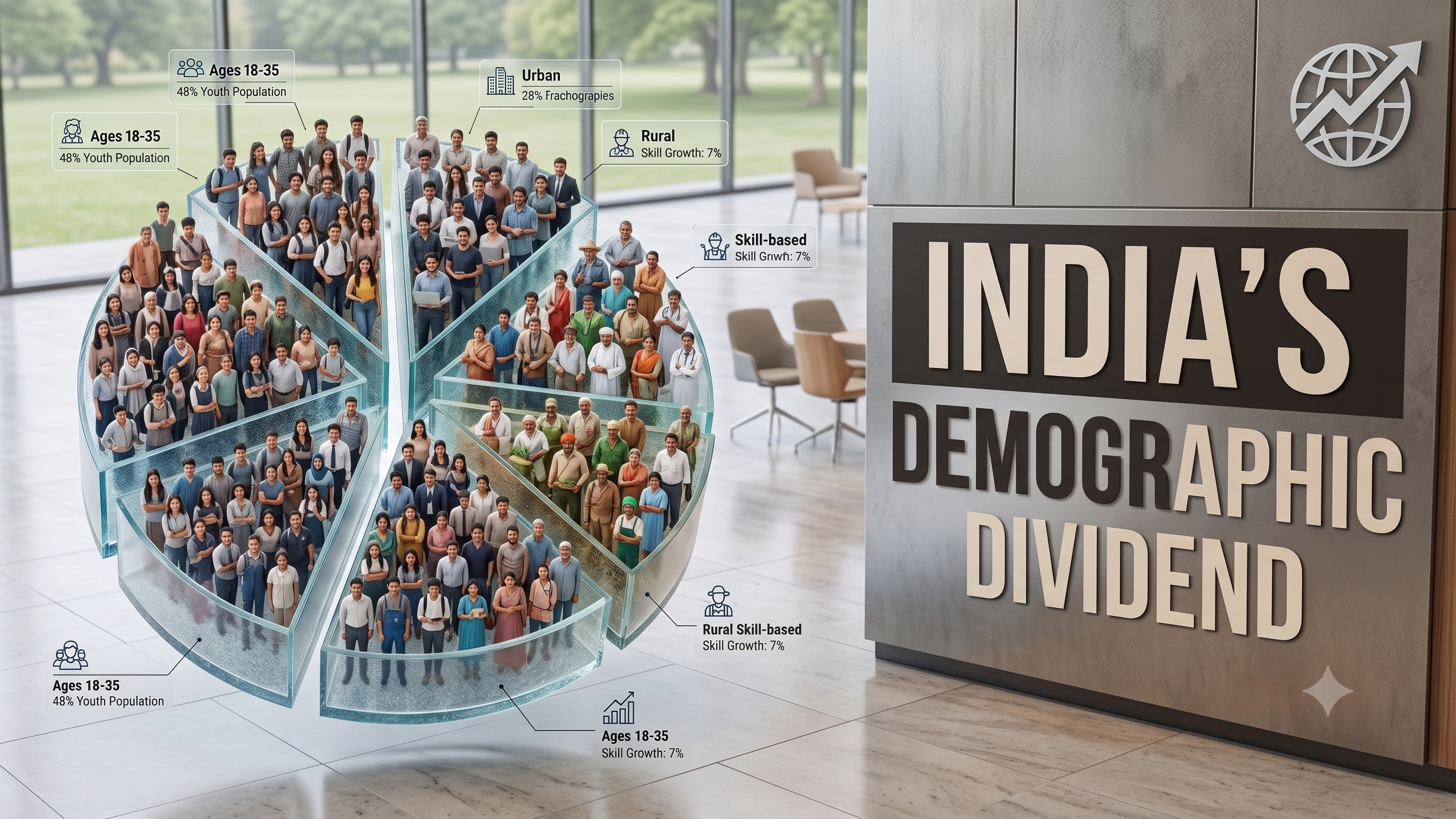
India’s vast youth population is often described as a demographic dividend capable of accelerating economic growth and national development. However, a demographic dividend is merely a window of opportunity and not an automatic guarantee. It yields economic benefits only when the labour market successfully enables young generations, particularly Gen Z, to transition from education into productive, secure, and skilled employment.
Challenges in Harnessing India’s Demographic Potential
The Graduate Trap and Open Unemployment
- Higher education is increasingly failing to ensure employment.
- According to PLFS data, graduate-level unemployment among Gen Z males stands at 29%, while among young women it reaches 36.9%.
- This reflects a growing disconnect between educational attainment and labour market demand.
Severe Gender Disparities in Labour Force Participation
- Female labour force participation remains significantly lower than that of men.
- Urban Gen Z female unemployment reaches 22.6%.
- Social norms, safety concerns, mobility constraints, and unpaid care responsibilities continue to impede women’s workforce participation.
Pervasive Informalisation and Job Insecurity
- Employment quality remains a major concern.
- Only 20.1% of Gen Z workers are covered by social security, while merely 14.1% possess formal job contracts.
- The majority remain engaged in casual, informal, or unpaid work.
Technological Disruption and Skill Mismatch
- Automation, Artificial Intelligence (AI), and digital transformation are rapidly altering job requirements.
- Traditional curricula and skilling programmes often lag behind evolving industry needs.
Measures to Harness India’s Demographic Potential
Expand Labour-Intensive Sectors
- Promote employment-rich sectors such as textiles, food processing, tourism, logistics, and green infrastructure.
- Leverage initiatives such as Make in India and PLI Schemes.
Strengthen School-to-Work Pathways
- Scale up the National Apprenticeship Promotion Scheme (NAPS) and industry-linked internships.
- Improve industry-academia collaboration under NEP 2020 and Skill India Mission.
Promote Women’s Workforce Participation
- Invest in safe public transport, affordable childcare facilities, and flexible work arrangements.
- Strengthen initiatives under Mission Shakti and the care economy.
Encourage Formalisation of Employment
- Provide incentives for MSMEs to offer formal contracts and social security coverage.
- Expand implementation of the Code on Social Security, 2020 and e-Shram Portal.
Explore Urban Employment Models
- Pilot urban employment programmes focused on public services, environmental restoration, and digital governance for educated youth.
The challenge before India is no longer whether its youth are prepared for work, but whether the economy is prepared for them. Moving beyond the celebration of demographic numbers towards creating quality employment opportunities is essential to prevent social frustration, uphold the constitutional goal of economic justice, and transform India’s demographic potential into a foundation for Viksit Bharat 2047.
| PYQ REFERENCE UPSC 2021 Q. Skill development programmes have succeeded in increasing human resources supply to various sectors. In the context of the statement, analyse the linkages between education, skill, and employment. |