

1. “In a welfare state, documentation should facilitate inclusion rather than become a barrier to accessing rights.” Discuss in the context of delayed birth registration in India.
| Syllabus: General Studies – : II Government policies and interventions for development in various sectors and issues arising out of their design and implementation. |
IN NEWS: Proof of life
A welfare state is constitutionally obligated to ensure that procedural requirements do not obstruct substantive rights. Birth registration, governed by the Registration of Births and Deaths Act, 1969, is the gateway to legal identity and access to welfare. However, delayed registration often excludes vulnerable citizens from essential services, raising concerns about balancing administrative integrity with social justice.
How delayed birth registration becomes a barrier to rights
Exclusion from welfare entitlements
- Denial or delay in accessing education, healthcare, scholarships, pensions, and social security schemes.
- Difficulty in availing benefits under programmes such as PM-JAY, ICDS, and PM-KISAN where identity documentation is required.
Marginalisation of vulnerable groups
- Tribal communities, migrant workers, homeless persons, disaster-affected populations, and children born outside institutional healthcare face higher risks of non-registration.
- Women and children suffer disproportionately due to weak documentation systems.
Violation of constitutional and human rights
- Undermines Articles 14, 15, 21 and 21A, affecting equality, dignity, education and life.
- Contravenes India’s obligations under the United Nations Convention on the Rights of the Child, which recognises every child’s right to registration immediately after birth.
Administrative consequences
- Creates lifelong hurdles in obtaining Aadhaar, passports, voter identity cards, and employment documents.
- Increases litigation and dependence on discretionary administrative approvals.
Need for documentation with integrity
- Reliable civil registration is essential for demographic planning, public health, fraud prevention and targeted welfare delivery.
- Accurate records strengthen governance, disaster response and evidence-based policymaking.
- Safeguards are necessary to prevent fraudulent claims and identity manipulation.
Measures to ensure inclusion
- Adopt a rights-based and citizen-centric approach to delayed registration.
- Simplify procedures through self-declarations, community verification and digital records.
- Strengthen universal institutional birth registration and door-step registration in remote areas.
- Integrate Civil Registration System (CRS) with health institutions while ensuring accessibility.
- Conduct awareness campaigns and provide legal aid for vulnerable populations.
- Implement the recommendations of the Registrar General of India for universal and timely registration.
In a welfare state, documentation is a means to realise rights, not a precondition that excludes citizens from them. Administrative safeguards must coexist with constitutional compassion so that birth registration promotes inclusive governance, social justice and universal access to welfare, leaving no citizen invisible.
| PYQ REFERENCE UPSC 2017 Examine the scope of Fundamental Rights in the light of the latest judgment of the Supreme Court on Right to Privacy. (GS-II, 15 Marks) |
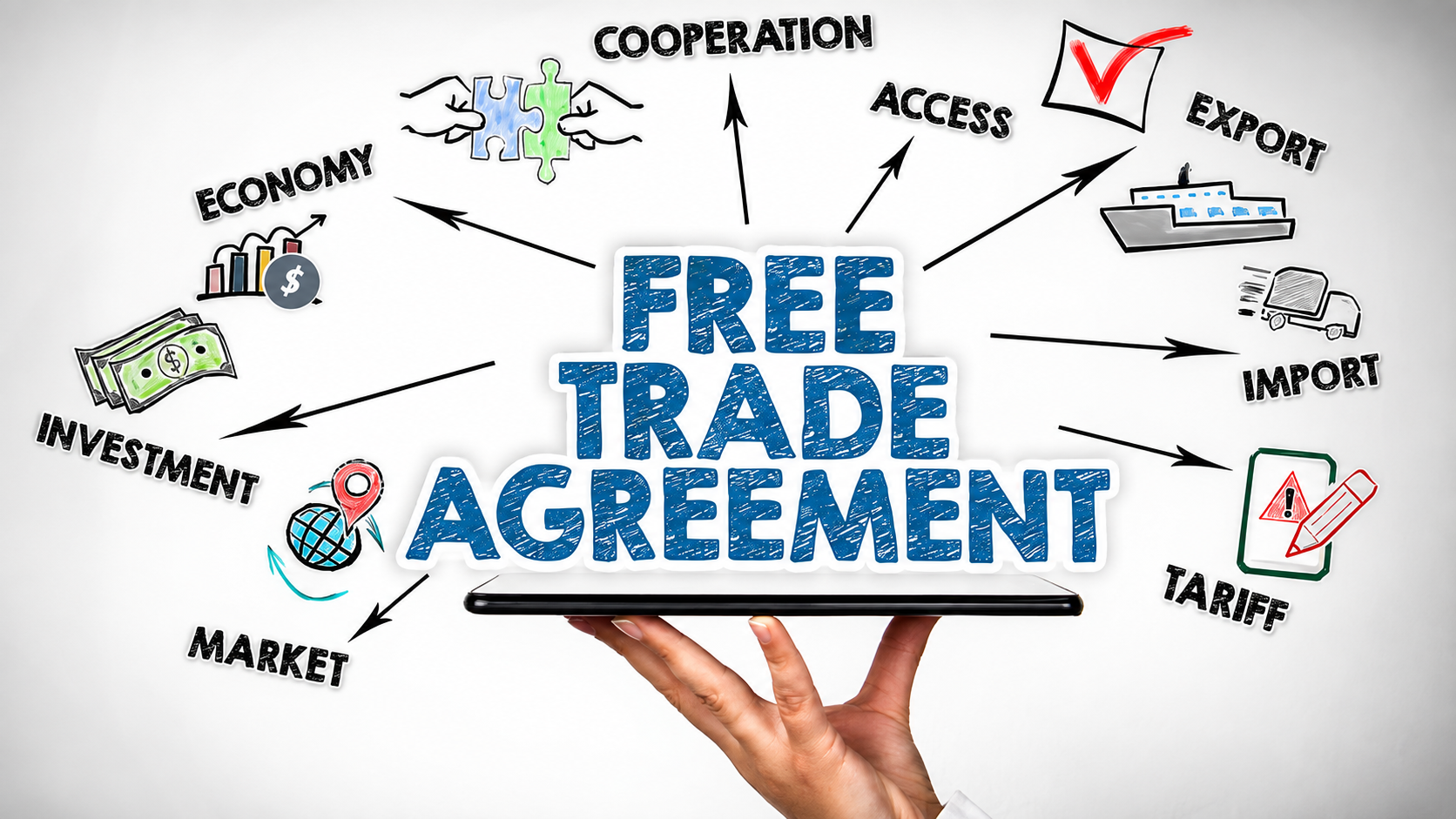
2. “India needs an industrial policy-led FTA strategy rather than an FTA-led industrial strategy.” Discuss.
| SYLLABUS: Indian Economy General Studies – : Effects of liberalization on the economy, changes in industrial policy and their effects on industrial growth. |
IN NEWS: The problem with India’s free trade agreement strategy
Free Trade Agreements (FTAs) reduce tariff and non-tariff barriers to promote trade and investment. However, India’s experience with several FTAs has highlighted that trade liberalisation alone cannot create globally competitive industries. As emphasised in the Economic Survey 2025–26, FTAs should complement—not substitute—a coherent industrial policy aimed at strengthening domestic productive capacity.
Why India needs an industrial policy-led FTA strategy
1. Builds domestic competitiveness before market opening
- Industrial policies such as Production Linked Incentive (PLI), Semicon India Programme, and PM Gati Shakti improve manufacturing capabilities before exposing firms to global competition.
- Enhances productivity, technology adoption and economies of scale.
2. Promotes integration into Global Value Chains (GVCs)
- Sector-specific industrial support enables firms to benefit from FTAs in electronics, automobiles, pharmaceuticals and textiles.
- Aligns trade commitments with national manufacturing priorities.
3. Prevents premature de-industrialisation
- Opening markets without competitive industries can increase imports, widen trade deficits and hurt MSMEs.
- Ensures calibrated tariff liberalisation for sunrise and strategic sectors.
4. Strengthens employment and value addition
- Industrial policy encourages labour-intensive manufacturing and domestic value chains.
- Supports the objectives of Make in India and employment-led growth.
5. Enhances strategic autonomy
- Industrial policy identifies critical sectors such as semiconductors, renewable energy, defence and critical minerals where selective protection and incentives are necessary.
- FTAs can then be negotiated to secure technology, investment and resilient supply chains.
Why FTAs remain important
- Expand export markets and diversify destinations.
- Attract FDI and technology transfer.
- Improve access to affordable intermediate inputs.
- Increase India’s participation in trusted global supply chains.
- Recent FTAs with UAE, Australia, and the UK create opportunities for merchandise exports, services and skilled mobility.
Way Forward
- Adopt sector-specific FTA negotiations aligned with industrial priorities.
- Strengthen R&D, skilling, logistics and MSME competitiveness.
- Use Rules of Origin, safeguard measures and quality standards to prevent import circumvention.
- Align FTAs with the National Manufacturing Mission, PLI, National Logistics Policy, and Districts as Export Hubs initiative.
- Continuously review FTA outcomes based on export performance and domestic value addition.
An industrial policy determines what India should produce competitively, while FTAs determine where those products can be sold efficiently. Therefore, India’s trade strategy should be driven by industrial capabilities rather than expecting FTAs alone to create them, ensuring sustainable manufacturing growth, employment generation and progress towards Viksit Bharat 2047.
| PYQ REFERENCE UPSC 2018 Q. What are the key areas of reform if the WTO has to survive in the present context of ‘Trade War’, especially keeping in mind the interest of India? |