

1. Examine the implications of the evolving geopolitical landscape in West Asia for India’s strategic and economic interests.
| Syllabus: International Relations General Studies – : II Bilateral, regional and global groupings and agreements involving India and/or affecting India’s interests. |
IN NEWS: Moving from war to deal in a deeply divided region
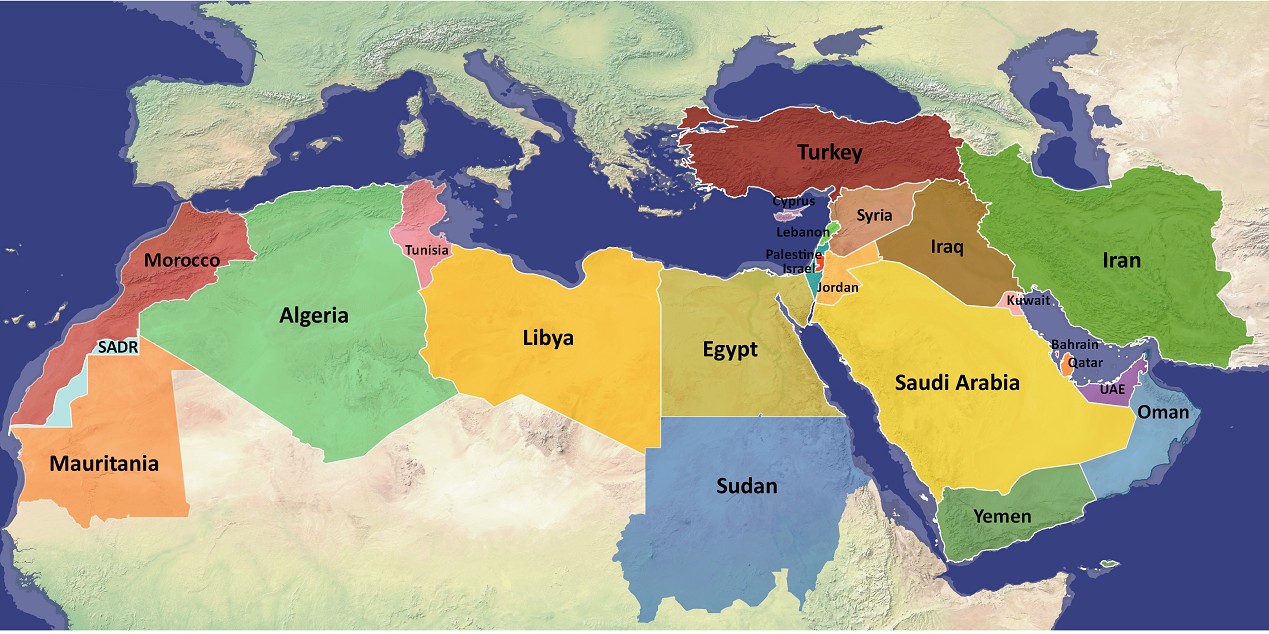
The geopolitical landscape of West Asia (the Middle East) has entered a highly volatile phase, marked by escalating confrontations between Israel and Iran, expanding maritime risks in critical chokepoints like the Red Sea and the Strait of Hormuz, and a gradual decoupling of economic strategies from strict oil dependence.
Strategic Implications for India
A. The Challenge of “Multi-Alignment”
India’s traditional foreign policy pillar in the region is calibrated multi-alignment—maintaining parallel, robust relations with competing power centers: the Gulf Monarchies (Saudi Arabia, UAE), Israel, and Iran.
- The Strain: As active conflicts escalate (such as the friction involving US-Israel strikes and Iranian retaliation), maintaining open channels with all sides becomes diplomatically challenging.
Takshashila Institution
- The Pivot: India avoids taking rigid sides, positioning itself instead as a non-partisan middle power, which preserves its strategic autonomy but tests its diplomatic dexterity.
Maritime and Chokepoint Security
The security of vital sea lines of communication (SLOCs) is a critical national interest.
- The Threat: Spikes in regional hostilities directly threaten the Strait of Hormuz (through which a significant portion of India’s gas and LPG imports pass) and the Bab-el-Mandeb/Red Sea route.
- The Fallout: Geopolitical friction risks translating into immediate spikes in shipping insurance premiums, freight rates, and threats to commercial vessels, directly impacting India’s trade routing.
Major Connectivity Bottlenecks
- IMEC vs. Reality: The ambitious India-Middle East-Europe Economic Corridor (IMEC), launched to bypass traditional chokepoints and provide an alternative to China’s Belt and Road Initiative (BRI), faces severe execution friction. Geopolitical fragmentation and strained ties between regional actors stall coordinated multi-modal infrastructure development.
- The Eurasian Access: Similarly, instability complicates the operationalization of the International North-South Transport Corridor (INSTC) via Iran, which India relies on for access to Central Asia and Russia.
Economic Implications for India
A. Energy Security and Price Volatility
India imports nearly 88% of its crude oil, with West Asia historically fulfilling more than half of this demand.
- Supply Vulnerability: Disruptions in the Gulf directly threaten India’s fiscal deficit and domestic inflation.
- The Latency Cost: While India has aggressively diversified its oil basket (sourcing from Russia, Africa, and the Americas), non-Gulf oil takes significantly longer to reach Indian ports (2–4 weeks compared to 7 days from the Gulf), introducing structural latency and cost.
B. Diaspora Protection and Remittances
West Asia houses approximately 9.9 million Indian nationals, primarily concentrated within the Gulf Cooperation Council (GCC) states.
- Economic Lifeline: This diaspora acts as a crucial fiscal anchor, sending back over $40 billion annually in remittances. Regional instability endangers the physical safety of these citizens and introduces the looming threat of mass evacuation logistics, which can strain India’s domestic economy.
C. Trade Disruption and Market Access
Bilateral trade with the GCC stands at roughly $180 billion. Regional active combat immediately chokes export channels. For instance, high-value agricultural goods (like Basmati rice) routinely face logistical blockades at ports during sudden escalations, causing severe downstream drops in merchandise exports.
India’s response marks a definitive shift from the historical posture of passive “non-alignment” to an active, interest-driven policy of strategic autonomy and multi-alignment. Rather than viewing regional rivalries as a zero-sum game, New Delhi has successfully decoupled its bilateral ties. This approach allows India to deepen security and technological partnerships with Israel, advance critical connectivity via Iran, and elevate economic and defense integration with the Gulf monarchs to unprecedented heights.
| PYQ REFERENCE UPSC 2015 Q. The Gulf countries have been a traditional source of energy and remittance for India. However, changing economic and security architectures in the region demand a structural shift in India’s ‘Link West’ policy. Evaluate. (15 Marks, 250 Words) |
2. Has the anti-defection law succeeded in preserving democratic stability at the cost of legislative accountability and deliberation? Examine.
| Syllabus: Anti-Defection Law General Studies – : II Salient features of the Representation of People’s Act. |
IN NEWS: What does Tenth Schedule provide on party mergers?
The Anti-Defection Law, incorporated into the Indian Constitution via the 52nd Amendment Act of 1985 as the Tenth Schedule, was enacted to curb the unethical menace of opportunistic floor-crossing—famously termed the “Aaya Ram Gaya Ram” phenomenon.
While the law has largely realized its objective of preventing the frequent, arbitrary collapse of elected governments, it has inadvertently introduced structural trade-offs. By severely penalizing dissent, it has fortified government stability at the direct expense of individual legislative accountability, robust floor deliberation, and public representation.
The constitutional architecture governing defection is anchored in the following key provisions:
- Articles 102(2) and 191(2): State that an MP or MLA shall be disqualified for being a member of the House if they are so disqualified under the Tenth Schedule.
- Tenth Schedule (Paragraph 2) – Grounds for Disqualification:
- If a member voluntarily gives up membership of their political party (which the Supreme Court has ruled can be inferred from their conduct, not just formal resignation).
- If a member votes or abstains from voting contrary to any direction (Whip) issued by their political party without prior permission or subsequent condonation within 15 days.
- Tenth Schedule (Paragraph 4) – The Merger Exception: Protection from disqualification is granted only if an original political party merges with another, and at least two-thirds of the members of the legislature party agree to the merger. (Note: The 91st Amendment Act, 2003 eliminated the “one-third split” loophole due to rampant misuse).
- Tenth Schedule (Paragraph 6) – Adjudicating Authority: The power to decide on disqualification rests with the Speaker or Chairman of the House.
The Tenth Schedule has undeniably injected a level of systemic stability into India’s parliamentary framework:
- End of Wholesale “Horse-Trading”: It has successfully checked retail political corruption where individual legislators routinely shifted allegiances mid-term for personal aggrandizement or monetary incentives.
- Protection of Electoral Mandates: By ensuring that a candidate elected on a specific party symbol remains aligned with that party’s manifesto, it honors the collective political choice made by the electorate.
- Governing Predictability: It allows the executive branch to focus on policy execution, draft long-term development programs, and pass annual budgets without the perpetual fear of sudden, backroom floor-defections.
Despite stabilizing governments, the law has severely weakened the core principles of an active parliamentary democracy:
A. Subversion of Legislative Deliberation
- Death of Parliamentary Debate: Because the party whip is strictly binding on all legislative items—regardless of whether it is a critical Money Bill or a routine piece of legislation—true debate is marginalized. MPs and MLAs are reduced to mere numeric tallies for party bosses rather than active, reasoning debaters.
- Suppression of Conscience and Dissent: It completely eliminates the space for a legislator to dissent against a flawed party line or vote in accordance with their independent conscience.
B. Dilution of Individual Accountability
- The Party High-Command Culture: The law reconfigures the democratic principal-agent relationship. A legislator’s ultimate accountability shifts entirely upward to the party high command rather than downward to their local constituents.
- Disconnect from Local Constituency Interests: If a government bill or policy directly harms a legislator’s home constituency, the anti-defection law prevents them from voting against it. They must favor the national party dictate over local voter welfare, breaking the vertical chain of representative democracy.
C. Institutional Weaknesses and Loopholes
- The Merger Multiplier: While the law successfully stopped individual defection, it has unintendedly institutionalized mass defection. Under the 2/3rd merger exception (Paragraph 4), entire cohorts of legislators can switch allegiances collectively under the legal umbrella of a “merger.”
- Partisan Enforcement by the Speaker: The Speaker’s office, which remains political in practice, often exercises a selective “pocket veto.” Disqualification petitions against opposition members are fast-tracked, while those favoring the ruling party are delayed indefinitely, defying the foundational purpose of timely, quasi-judicial neutrality.
The Supreme Court has continuously stepped in to balance the law’s rigid edges:
- Kihoto Hollohan v. Zachillhu (1992): The Court upheld the constitutional validity of the Tenth Schedule but explicitly ruled that the Speaker acts as a quasi-judicial tribunal. Consequently, the Speaker’s decisions are subject to judicial review on grounds of infirmity, malafides, or perversity.
- Keisham Meghachandra Singh v. Speaker, Manipur (2020): To counter strategic delays, the Supreme Court held that the Speaker must decide a disqualification petition within a reasonable period, normally 3 months, unless exceptional circumstances exist.
Way Forward
- Restrict the Scope of the Whip: The mandatory binding whip should be confined exclusively to votes that directly determine the survival of the government—such as No-Confidence Motions, Confidence Motions, and Money Bills (Budgets). For all other ordinary bills, legislators should be free to vote according to their conscience and constituency demands.
- Independent Adjudication: As suggested by the 2nd Administrative Reforms Commission (ARC), the power to decide disqualification under the Tenth Schedule should be stripped from the Speaker and vested in the President or Governor, acting on the binding advice of the Election Commission of India, or transferred to a permanent independent tribunal.
| PYQ REFERENCE UPSC 2022 Q. “The Anti-Defection Law was enacted to bring stability to governments; however, it has often been criticized for undermining the role of legislators as independent thinkers.” Critically analyze. (15 Marks, 250 Words) |